Moisture Sensitive Devices: MSL, Floor Life & Turnkey PCBA Handoff
Table of Content
ORINEWPCB · COMPONENT HANDLING & TURNKEY PCB ASSEMBLY
Direct answer: Moisture sensitive devices need controlled handling before solder reflow. Check the exact component’s moisture sensitivity level (MSL), keep its dry-pack and exposure records, and confirm that the remaining floor life covers the planned build. An MSL 3 device typically has a 168-hour floor life at no more than 30°C and 60% relative humidity. Unknown exposure history needs review before assembly; putting a used reel into a new bag is not evidence that its floor-life allowance has restarted.
For a turnkey PCB assembly inquiry, send the BOM and build files with any supplied-part labels, bag-opening history and special handling instructions. This lets the engineering and sourcing teams identify material questions before they become production scheduling decisions.
A component can be the correct part number, electrically suitable and available for placement, yet still need a handling decision. This guide focuses on the handoff between purchasing, stores and PCB assembly: what to check, what to record and what to ask when moisture exposure is known, uncertain or already over the stated allowance.
It is intended for hardware engineers releasing a board, product managers planning a batch and buyers comparing assembly quotations. The examples are illustrative planning tools, not customer case studies or a substitute for a component manufacturer’s process instructions.
What are moisture sensitive devices, and what does MSL mean?
Moisture sensitive devices are components whose packages require precautions against absorbed moisture when exposed to soldering heat. A package may take in moisture during ambient storage. During reflow, internal stresses associated with moisture and heating can contribute to cracking or delamination. Moisture sensitivity is therefore a material-handling issue as well as an assembly issue.
MSL describes a package’s moisture/reflow classification. It is not a universal shelf-life rating for every electronic component, and a higher number does not mean that the device has better electrical quality. The rating must be read together with the applicable environmental conditions and the component’s peak reflow limit.
Check the exact orderable part and shipment label. Do not assign one MSL to all QFNs, BGAs or parts from the same manufacturer. Microchip’s July 2020 MSL communication explains that even a package type can have different classifications when the package materials used at different assembly sites differ.
IPC/JEDEC J-STD-020 covers moisture/reflow classification; J-STD-033 covers handling, packing, shipping and use. The reviewed J-STD-033D document is dated April 2018. Use the revision specified for the project together with current product-specific guidance; a summary table alone does not define an approved factory process.
MSL floor-life reference table
Floor life is the permitted exposure interval outside a compliant dry environment before reflow, subject to the stated conditions. This quick reference matches the common classifications documented in TI’s SLVA840 and NXP’s AN1902. A shipment’s caution label and product requirements take precedence when they impose a specific restriction.
On a phone, swipe within the table or focus the table region and use the arrow keys.
| MSL | Floor-life reference | Reference environment / instruction |
|---|---|---|
| 1 | Unlimited for moisture/reflow exposure under the stated condition | ≤30°C and ≤85% RH; other storage and process limits still apply. |
| 2 | 1 year | ≤30°C and ≤60% RH |
| 2a | 4 weeks | ≤30°C and ≤60% RH |
| 3 | 168 hours | ≤30°C and ≤60% RH |
| 4 | 72 hours | ≤30°C and ≤60% RH |
| 5 | 48 hours | ≤30°C and ≤60% RH |
| 5a | 24 hours | ≤30°C and ≤60% RH |
| 6 | Mandatory bake before use; then reflow within the label’s time limit | Follow the component label and approved instructions. |
These values are not a blanket permission to leave parts on a bench. Conditions above the reference temperature or humidity may reduce the usable exposure interval. If the actual environment differs, ask for a handling assessment rather than applying a guessed multiplier.
What to check when a reel or tray arrives
For a practical incoming review, ask for a traceable connection between the physical material and the BOM line. One photograph of a reel is rarely enough if it does not show the relevant label or bag condition.
- Match identity: manufacturer, full ordering code, package, quantity and lot/date-code identifiers where available. Keep substituted or mixed lots separate in the record.
- Inspect the packaging: note whether the moisture barrier bag (MBB) is sealed, damaged, opened or resealed. Retain the bag’s caution label and seal date.
- Record the handling evidence: when opened under the procedure, check the humidity indicator card (HIC) as instructed and keep the result with the material record. An HIC is not a complete timeline of earlier exposure.
- Clarify prior use: for a partial reel, ask who opened it, when, for how long and in what environment. “Stored carefully” is not a measurable exposure history.
- Set a disposition: accepted for the planned process, held for clarification, assigned an approved drying step, or replaced. Identify the person responsible for releasing it.
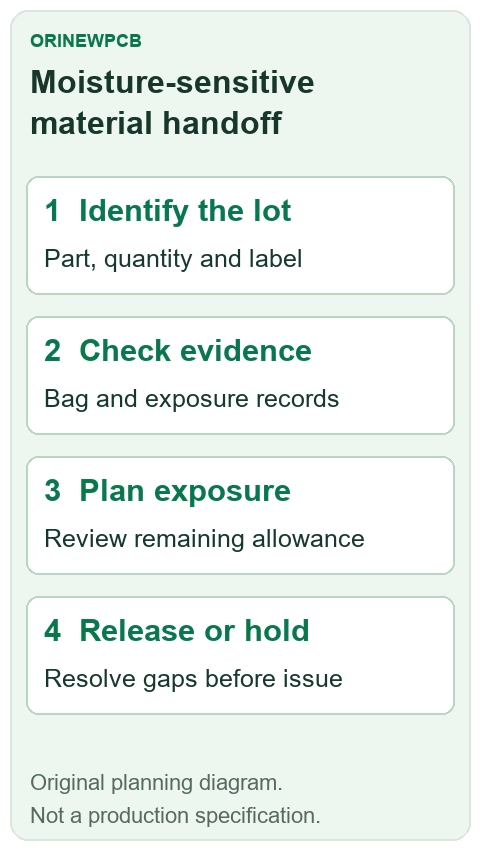
Keep moisture control and ESD control separate in the checklist. Do not assume an antistatic bag is a compliant moisture barrier bag. Ask the supplier to identify the packaging and handling requirements for the exact device.
How to track cumulative floor life: an MSL 3 example
The useful question is how much permitted exposure has already been used before the next relevant reflow operation. Preparation, placement delays and interruptions need to be considered in the agreed process. Records should follow the lot, not just the purchase-order number.
Illustrative example: A labeled MSL 3 lot has a 168-hour allowance under the reference conditions. Its recorded ambient exposure is 18 hours during an earlier build, 6 hours during inspection and repacking, and 14 hours during later production preparation.
Recorded exposure = 18 + 6 + 14 = 38 hoursPlanning balance = 168 − 38 = 130 hours
The 130 hours is a planning balance for this example, not a release approval. It assumes those exposure intervals were recorded under applicable conditions and that intervening storage was handled correctly. Unknown shipping or storage intervals cannot be entered as zero.
A useful lot record can contain: part number; lot identifier; label MSL and reflow limit; bag seal/open times; exposure intervals; temperature/RH evidence; storage or drying history; remaining allowance; planned process; and release authorization. There is no need to hide uncertainty: write “unknown” and resolve it.
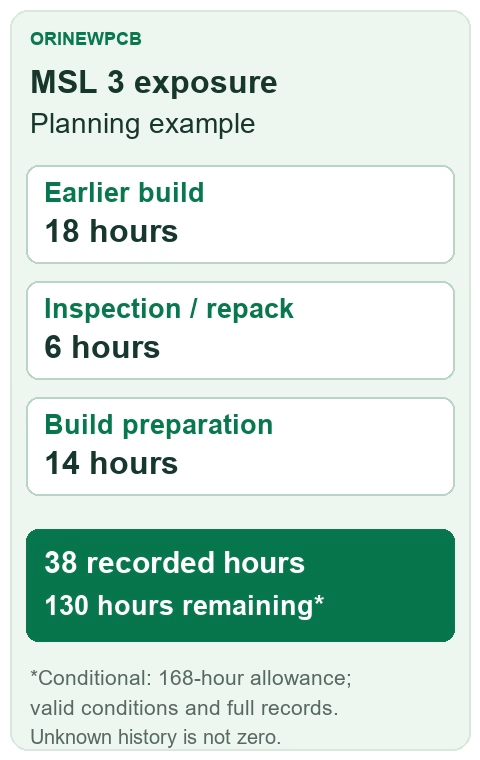
For double-sided assembly or later rework, ask how the handling plan accounts for all relevant heating steps. Record the release assumptions before parts are issued to the line. A spreadsheet that covers only the first placement step can miss a later scheduling gap.
When should parts be held instead of sent to assembly?
Make the decision visible to purchasing and production. This suggested review matrix helps teams ask the right question without pretending that every device has the same recovery process.
| Material condition | Question to resolve | Suggested next step |
|---|---|---|
| Sealed bag; matching label | Are seal date, packaging condition and device requirements acceptable? | Review the evidence and release under the agreed handling process. |
| Opened lot; complete exposure record | Does remaining allowance cover the planned operations? | Confirm the schedule and storage plan before issue. |
| Opened lot; exposure unknown | Can the supplier reconstruct reliable history? | Hold for disposition. Review an approved drying route or replacement. |
| Floor life exceeded or HIC indicates excessive moisture | What recovery instructions apply to this device and carrier? | Use the manufacturer’s/approved-standard procedure before release. |
| Missing MSL or conflicting labels | Which rating applies to the actual shipment? | Obtain product/lot-specific clarification rather than guessing by package shape. |
For a purchasing team, the commercial consequence is usually a decision dependency: extra review, drying, repacking or replacement may affect when material can be released. Request that dependency in the quotation. Do not convert it into a promised delay or a standard surcharge before the actual lot has been reviewed.
Why there is no universal baking recipe
Baking time and temperature depend on the device, package thickness, exposure history and approved drying method. Shipping carriers have their own temperature limits. Microchip specifically notes that its MSL 1 products can ship in non-bakeable trays; a tray should not be treated as heat-compatible merely because the component is.
Before authorizing a drying step, ask:
- Which component instruction and standard revision define the procedure?
- Is the reel, tape, tray or tube rated for that temperature, or must parts be transferred to an appropriate carrier?
- What records will show the completed drying step and subsequent storage?
- How will the lot remain identifiable during any transfer, splitting or repacking?
- Who will confirm that the material can re-enter the assembly process?
Likewise, placing material into a dry cabinet does not automatically establish a new 168-hour allowance. The storage conditions, duration and applicable procedure must support any pause or recovery claim. Record the transition instead of deleting the earlier exposure history.
Bare PCBs need their own assessment. This component MSL table is not a universal PCB baking specification. Discuss board material, finish and fabrication guidance separately; a component-handling instruction should not be copied onto a bare-board work order without review.
Full turnkey versus supplied parts: assign the handling owner
A turnkey PCB assembly project can connect PCB fabrication, component procurement and assembly through one project review. It still needs explicit decisions about material evidence and any parts supplied by the customer. Use the following responsibility checklist when comparing scopes.
| Build model | Information to agree | RFQ question |
|---|---|---|
| Full turnkey | Supplier sourcing route, incoming evidence, lot handling and any review exceptions. | How will moisture-sensitive BOM lines be reviewed before production release? |
| Partial turnkey | Separate purchased and customer-supplied lots; name the owner for each handoff. | Which supplied parts need label photos or exposure records before quotation is confirmed? |
| Customer-supplied parts | Shipment condition, open/reseal history, quantity and acceptance/disposition responsibility. | What happens if the received lot has unknown exposure or unsuitable packaging? |
| Repeat build with leftover material | Retained lot quantity, storage records and status since the previous order. | Can the remaining material be released for the new build, and what evidence supports that? |
Engineers should resolve the component and process limits. Product managers should make material release a prerequisite for the planned build date. Buyers and business owners should compare responsibility and scope exclusions alongside price. These are recommended project controls, not claims that a particular supplier includes every activity by default.
For a broader scope comparison, see the partial turnkey PCBA sourcing checklist and the brand’s OrinewPCB turnkey assembly overview.
MSL handoff checklist for a turnkey PCBA quote
You can start a discussion while some documents are pending. Mark those gaps clearly so the preliminary scope is not mistaken for production release. Include these inputs:
- Build identity: board name, revision, assembly variant and requested prototype/production quantities.
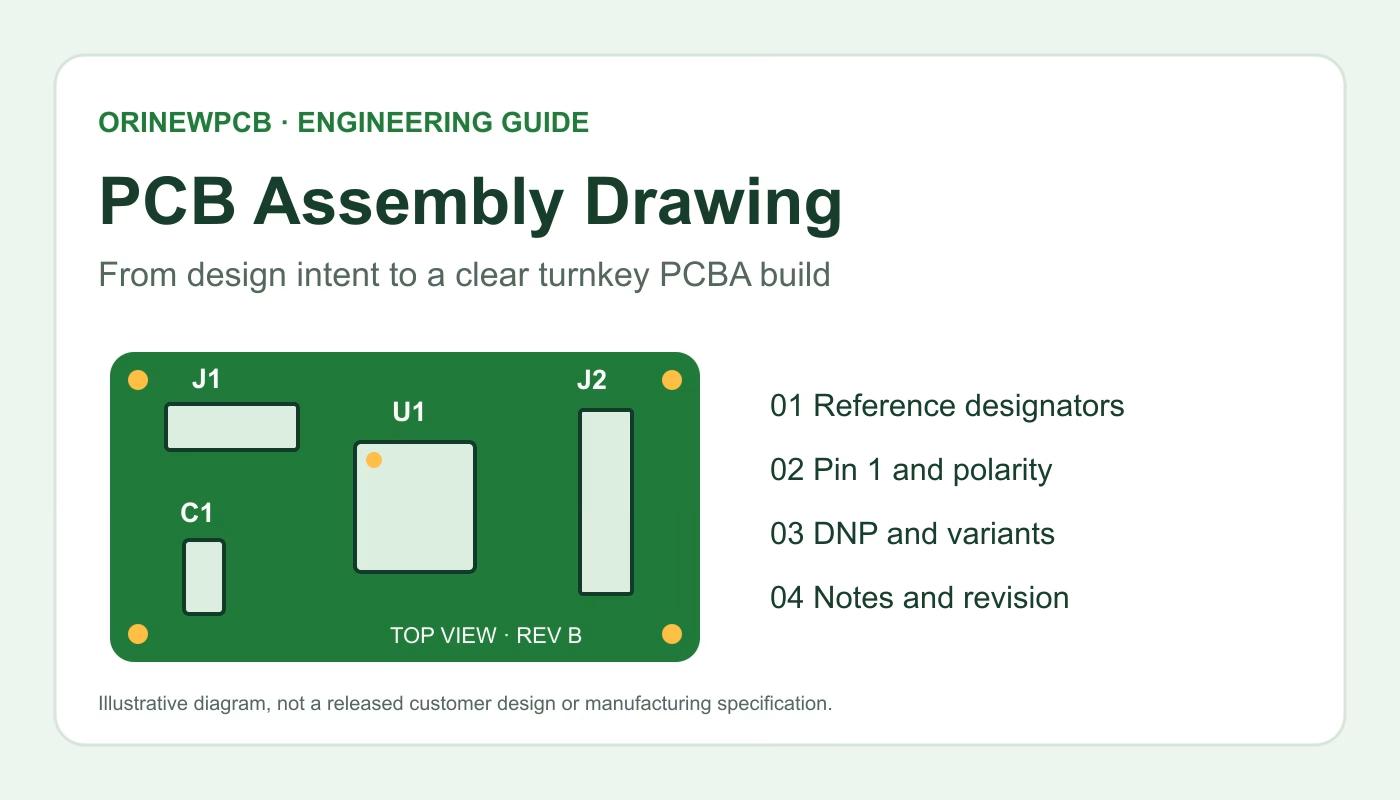
- Fabrication and assembly data: Gerber or agreed fabrication files, BOM, placement file and assembly drawing.
- BOM detail: full manufacturer part numbers, approved alternatives, DNP positions and which parts are customer-supplied.
- Moisture-sensitive material: label photos, lot quantities, MSL/reflow requirements, bag status and known exposure/storage history.
- Process requirements: double-sided assembly, secondary soldering, programming, testing or rework restrictions that need review.
- Planning information: target date, delivery destination and the contact authorized to approve material questions or substitutions.
Copy this inquiry outline:
“Please review full turnkey PCB fabrication, BOM sourcing and assembly for [board/revision], at [quantities]. Customer-supplied parts are [list/none]. Moisture-sensitive lot labels and available exposure records are attached; unknown items are marked. Please identify handling questions, any drying or replacement decisions, scope exclusions and the information needed to confirm the build schedule. Programming/test requirements are [details/pending].”
Keep the moisture record alongside the other release documents. The prototype-to-production checklist covers the wider release decisions; this article provides the specific component-exposure handoff.
Related OrinewPCB video: production release risks
This companion video discusses component variables, manufacturability and checks before a production batch. It provides broader release-planning context; it is not an MSL baking tutorial or a device-specific process instruction.
Watch on the official OrinewPCB YouTube channel · Browse OrinewPCB videos
Frequently asked questions
What does MSL 3 mean for PCB assembly?
The common MSL 3 floor-life reference is 168 hours at ≤30°C and ≤60% RH. Use the actual component label and applicable procedure, track exposure and check the device’s reflow limits before release.
Does resealing a reel reset its floor life?
Resealing alone is not proof that moisture already absorbed by a package has been removed. Keep prior exposure records and apply the approved storage or drying procedure before claiming a pause or reset.
Can I send opened or partial reels for turnkey PCB assembly?
You can discuss them with the assembler. Provide part/lot labels, quantity, packaging condition and available exposure history. Mark unknown intervals. Acceptance and any additional handling follow material review rather than a blanket promise.
Do all QFN or BGA components have the same MSL?
No. Check the exact device and shipment. Package materials and qualification can differ. The same visible package family is not enough to select a handling allowance.
Should every component be baked at 125°C?
No. The component and carrier limits, package thickness and applicable instructions determine the drying method. Do not use one time/temperature setting for every BOM line or shipping container.
Does MSL 1 mean unlimited storage life?
No. Its unlimited floor-life reference applies to moisture/reflow exposure under the stated environmental condition. Other storage, packaging, solderability and product-specific limits still need review.
Does this MSL table apply to bare PCB baking?
No. Review bare-board material, surface finish and fabrication instructions separately. A semiconductor package’s moisture classification is not a PCB drying recipe.
Can OrinewPCB quote a project before the exposure records are complete?
Send the available BOM, PCB files and quantities and clearly identify the missing records. OrinewPCB can discuss the project; final material acceptance, price, available scope and schedule require review.
Technical basis and application limits
The floor-life reference was cross-checked against Texas Instruments SLVA840 (January 2017) and NXP AN1902 Rev. 9 (28 April 2021). Shipment-label considerations were checked against Microchip’s MSL communication (July 2020). The handling/classification distinction was checked against the IPC publication for J-STD-033D (April 2018). These are reference documents; they do not establish a universal baking cycle. Confirm the current device documentation and the standard revision agreed for your project.
Review the material handoff before your next build
Need PCB fabrication, BOM sourcing and assembly coordinated for one project? Send OrinewPCB your available files, quantities and material questions. Tell us which parts are supplied, which records are missing and what testing or programming your product needs.
Request a Turnkey PCB Assembly Quote
No final files yet? Start with a project description or email [email protected]. Available scope, price and schedule are confirmed after project review.
Related Posts
ORINEWPCB · PROJECT SUPPORT
Contact Us
Discuss your PCB assembly project with our team.
FREE QUOTE
Plan your turnkey PCBA build.
Share your quantity and requirements. Add Gerber files and a BOM when ready.
Files are optional for an initial discussion. Include any assembly, sourcing or testing requirements in your message.