Prototype to Production PCB Assembly: 7 Release Checks

Table of Content
- What should you check before batch PCB assembly?
- Prototype, pilot build and production: what changes?
- PCB assembly production checklist: seven release checks
- Watch: why a working prototype can still face batch risks
- Example: a late component change before a pilot build
- What to send for a turnkey prototype-to-production review
- Planning your next PCBA batch?
- Prototype-to-production PCB assembly FAQ
A practical guide from OrinewPCB for hardware teams and buyers preparing a repeatable PCBA build.
Your prototype powers up, the firmware runs, and the first demonstration succeeds. The next decision is different: is the complete manufacturing package ready for a repeatable batch? A working sample confirms what that sample did under the conditions you checked. It does not establish the consistency of future component lots, assembly setups or production tests.
This prototype-to-production PCB assembly checklist helps you define what should be reviewed before committing to a pilot build or a larger order. It applies to full turnkey projects and to builds where you supply selected PCBs or components.
What should you check before batch PCB assembly?
Review seven areas: the released file revision, BOM and approved parts, manufacturability, material and process readiness, first-article approval, inspection and functional tests, and written production release. Assign an owner and acceptance evidence to each area. Resolve open issues before releasing the affected purchasing or manufacturing work.
Request a Prototype & Batch PCBA Quote
Send your sample quantity, next-batch quantity and available files. If files are incomplete, start with your requirements.
Prototype, pilot build and production: what changes?
A prototype helps investigate the design. A pilot build checks how an agreed design and manufacturing process behave across a limited batch. Production repeats the approved build with controlled materials, instructions and acceptance checks. These are project stages, not fixed order quantities.
For low-volume and high-mix PCB assembly, the same planning matters even when the batch is small. Different BOM variants can create more opportunities for confusion than a larger order of one stable design.
PCB assembly production checklist: seven release checks
| Check | Evidence to agree | Typical release blocker |
|---|---|---|
| 1. File revision | One approved manufacturing package | Gerber, BOM or placement files disagree |
| 2. BOM & sourcing | Part numbers, supply scope and approved alternatives | An unapproved replacement or unresolved shortage |
| 3. DFM / DFA | Closed issues or documented, approved actions | A footprint, polarity or assembly-access issue remains open |
| 4. Build readiness | Material status, panel plan and assembly instructions | Materials or process preparation are incomplete |
| 5. First article | Agreed sample checks and approval route | The team has not defined what approval covers |
| 6. Inspection & tests | Coverage, firmware, fixtures and pass/fail criteria | A board can look correct without its functions being checked |
| 7. Production release | Written scope, revision and change-control instructions | Engineering and purchasing are approving different builds |
1. Freeze one manufacturing revision
Package the Gerber and drill files, BOM, component placement file, assembly drawings and fabrication notes together. Identify the board revision in the package and in a short release manifest. Include firmware and programming instructions when they are part of the build.
Cross-check reference designators between the BOM, placement data and assembly drawing. Label do-not-fit positions and variant differences. For placement data, identify the units, board origin, board side and rotation convention; do not assume that every exported file uses the assembler’s expected convention.
Release question: can the manufacturer identify the intended build without choosing between conflicting files?
2. Confirm the BOM and purchasing responsibilities
Specify the manufacturer and full manufacturer part number for sourced items. A value such as “10 kΩ resistor” is not a complete purchasing instruction: package, tolerance, power rating and other design-relevant characteristics may matter. Review component availability before fixing the production schedule.
List approved alternatives and parts that must not be substituted. A matching footprint does not prove electrical or firmware compatibility. The customer’s design owner should approve material changes against the application requirements.
For full or partial turnkey PCB assembly, record who supplies each material, the available quantity and expected arrival date. Ask the assembler to confirm handling allowances and packaging requirements rather than assuming a universal spare-parts percentage.
Release question: are the purchasing list, supplied-material inventory and substitution decisions clear?
3. Close DFM and DFA questions
Design for manufacturability (DFM) checks whether the board can be fabricated using the planned process. Design for assembly (DFA) reviews how parts can be placed, soldered, handled and inspected. Neither review replaces verification of the circuit’s intended function.
- Review footprints, component orientation and polarity against the released part list.
- Discuss fine-pitch devices, hidden joints, connectors and temperature-sensitive parts.
- Confirm panelization responsibility, tooling features, clearances and separation requirements.
- Resolve assembly access and mechanical-fit questions before the build begins.
Record each issue, the proposed action and who approves it. If a review changes the design, reissue the affected files together. For the process options, see OrinewPCB SMT assembly services.
Release question: have the manufacturing issues been closed or explicitly addressed in the approved plan?
4. Check materials and process readiness
The same design can need additional preparation when the batch or material source changes. Confirm the agreed PCB specifications, component packaging, incoming-material checks and assembly instructions. Review storage and moisture-sensitive handling against the applicable material requirements.
The manufacturing team should plan stencil work, placement setup, soldering sequence and the process settings required by the actual board and components. A prototype’s manually adjusted build should not silently become the production instruction.
Release question: are the materials ready, and can the approved assembly sequence be repeated?
5. Agree on first-article approval
Define the first-article sample quantity, checks, reporting format and approval owner before production. Depending on the project, the review may include component identity and orientation, assembly workmanship, dimensional fit, programming and agreed electrical or functional checks.
A photograph can support a visual review. It does not by itself confirm component parameters, hidden solder joints or functional performance. If physical samples need to be shipped for customer testing, include that step in the schedule and state which work may proceed while approval is pending.
Release question: does everyone know what the approval proves and who can release the remaining batch?
6. Define inspection and functional test coverage
AOI and visual inspection assess placement and visible assembly features. X-ray can help assess hidden solder connections. Functional testing checks operation under a specified procedure. Each method answers a different question; the build plan should state which methods are required and what evidence is retained.
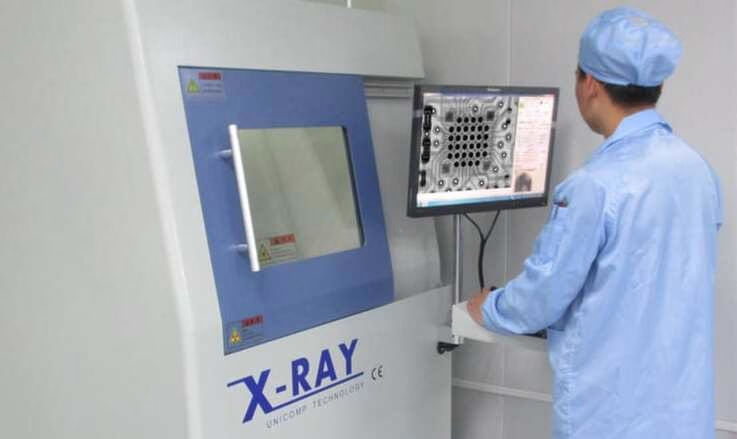
For programming or functional testing, identify the firmware version, test access, fixtures, power conditions, sequence and pass/fail limits. Agree on test coverage, records and how failures are handled. A vague instruction such as “test every board” is not a complete test specification.
Review the OrinewPCB factory and quality-control workflow when preparing the scope.
Release question: can the team determine whether a board passes using the agreed instructions?
7. Release the batch and control later changes
Record the approved board revision, BOM variant, quantity, material responsibilities, inspection and test scope, and delivery requirements in the production release. Match the engineering package to the commercial order so neither team is authorizing a different build.
After approval, identify changes that require review: a substituted component, new PCB revision, different firmware, revised test limit or changed manufacturing instruction. Decide which checks must be repeated before the affected work continues.
For repeat orders, reference the approved build and identify differences explicitly. A reorder should not rely on a remembered verbal agreement.
Release question: is the build authorized in writing, with a clear route for handling changes?
Watch: why a working prototype can still face batch risks
This OrinewPCB video explains how component variables, manufacturability and pre-production checks can affect the move from a functioning sample to a repeatable batch. Use the checklist above to turn those concerns into review items for your own project.
Video by OrinewPCB. The batch size in the video is an example, not a minimum order quantity.
Example: a late component change before a pilot build
Illustrative scenario, not a customer case: a team approves its prototype with one regulator, then proposes a different part because the original is unavailable for the next batch.
The right next step is to record the exact replacement and ask the design owner to review relevant electrical, package and operating requirements. Update the approved BOM, identify any affected assembly or test instructions, and decide whether new samples or additional verification are needed before release.
The lesson is practical: solving a shortage and approving a design change are separate decisions. Both should be recorded.
What to send for a turnkey prototype-to-production review
Send the information you have now, and clearly mark what is still in progress. A useful request includes:
- Application and stage: what the board does, what has been checked on the prototype, and what remains open.
- Quantities: samples, the next batch and any expected repeat order. State assembled-board quantity clearly.
- Files: released Gerber and drill files, BOM, placement data, drawings and fabrication notes.
- Materials: full turnkey or partial turnkey scope, approved alternatives and customer-supplied inventory.
- Verification: first-article requirements, firmware, fixtures, test procedure and acceptance criteria.
- Schedule: target delivery date and destination, including time needed for customer sample approval.
PCB fabrication, component availability, setup work and the agreed test scope all affect the quotation. Identify these items together so you can compare the complete build, not just an assembly charge.
Planning your next PCBA batch?
OrinewPCB coordinates PCB fabrication, component sourcing and assembly for turnkey projects. Send your prototype status, board files and next-batch requirements so the team can review the build scope and inspection or test plan with your quote.
Request a Turnkey PCBA Build Review & Quote
Not ready to upload files? Describe the application, quantity and support you need in the quotation form. Material availability, test scope and delivery are confirmed for the project.
Compare full and partial turnkey services · Explore small-batch assembly
Prototype-to-production PCB assembly FAQ
Does a working PCB prototype prove that a production batch will work?
No. It provides evidence about the sample under the conditions tested. A production build also needs controlled files, materials, assembly instructions and an agreed verification plan.
How many boards should a pilot build contain?
There is no universal quantity. Choose it according to the design risks, variants, test preparation and evidence needed before the next release. Discuss both the sample quantity and intended batch quantity with the manufacturer.
Is first-article inspection the same as functional testing?
No. First-article approval can include several agreed checks, but its scope must be defined. Visual and assembly inspection alone do not prove that the circuit performs its intended function.
Can I use customer-supplied components for the first batch?
Yes, a partial turnkey build can include agreed customer-supplied materials. Provide exact part numbers, quantities, packaging and expected arrival dates so material readiness can be reviewed.
What if a component becomes unavailable after the prototype?
Identify the proposed alternative and obtain design-owner approval before it is purchased or assembled. Update the BOM and decide whether the change requires additional samples or verification.
Can OrinewPCB review the project before all files are ready?
You can start an inquiry with your application, quantity, target date and current project status. A final manufacturing quote may require the complete board package, BOM and assembly or test instructions.
Use this guide to prepare a project review. The release checks, documentation and acceptance requirements should match your design and agreed manufacturing scope.