Partial Turnkey PCBA: Sourcing & Supplied-Part Checklist

Table of Content
- What is partial turnkey PCB assembly?
- 1. Choose the sourcing model for the complete build
- 2. Put the sourcing split into the BOM
- 3. Agree the supplied-part handover before shipping
- 4. Plan material readiness and shortage decisions
- 5. Compare the total build scope
- Partial turnkey purchasing questions
- Request a quote with a clear material split
ORINEWPCB · PCBA PURCHASING GUIDE
What is partial turnkey PCB assembly?
Partial turnkey PCB assembly splits material responsibilities between the customer and the assembly provider. You supply agreed boards or components; the provider sources the remaining materials and performs the agreed assembly work. The quote should define the exact split, inspection, programming, testing and delivery scope.
It can suit buyers with approved inventory or specific supplier relationships. It also adds a material handover: the complete build still needs every required item to be ready.
This guide helps engineering and purchasing teams prepare a shared-sourcing build. If you want one supplier to coordinate fabrication, the whole BOM and assembly, compare full turnkey PCBA first.
1. Choose the sourcing model for the complete build
Start with who supplies the PCBs and each BOM line. A service label alone does not define firmware, test fixtures, documentation or shipping.
| Model | Materials | Buyer task |
|---|---|---|
| Full turnkey | Provider coordinates PCB fabrication and agreed BOM sourcing. | Release the files, sourcing rules, quantity and test requirements. |
| Partial turnkey | Customer supplies specified materials; provider sources the remainder. | Mark the split and coordinate each supplied item’s arrival. |
| Consigned assembly | Customer supplies the agreed assembly material kit. Confirm bare PCB responsibility separately. | Prepare a complete inventory, packaging and delivery handover. |
None of these models automatically includes every test. Specify inspection, programming and functional testing in each quotation you compare.
2. Put the sourcing split into the BOM
Use the same approved BOM revision for both parties. Add a responsibility field to every fitted line: customer supplied or provider sourced. Mark do-not-fit items and product variants separately.
Customer-supplied lines
Part identity, quantity, packaging, condition and expected arrival date.
Provider-sourced lines
Approved part number, sourcing restrictions, alternatives and purchase approval.
One controlled build package
Match both material lists to the PCB, BOM and assembly revision. Agree readiness, shortages and tests before production release.
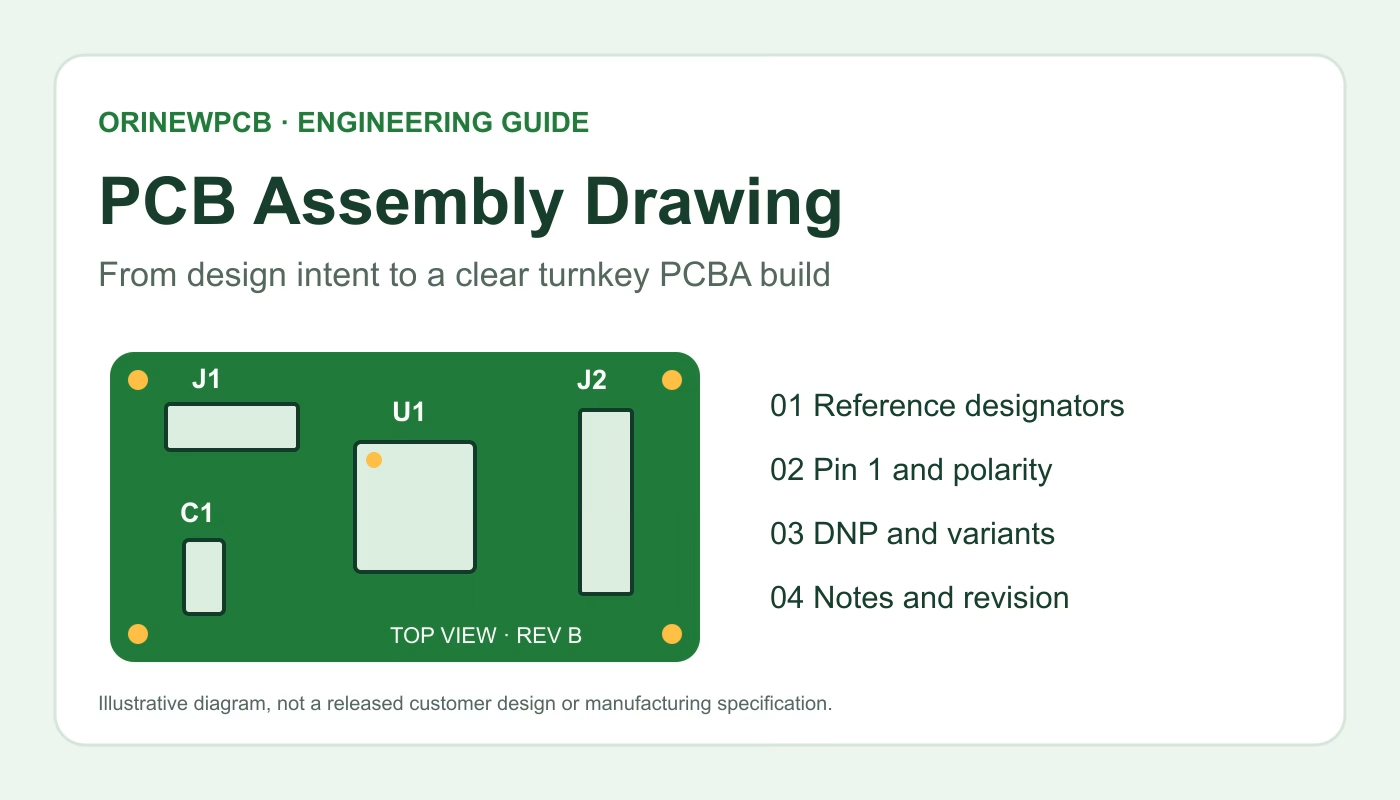
- Part identity: exact manufacturer part number, reference designators and quantity per board.
- Alternatives: approved substitutes and who must approve a proposed change.
- Responsibility: who purchases, delivers and replaces a missing or unsuitable item.
- Inventory: supplied quantity, purchasing quantity and any agreed process allowance.
- Exceptions: do-not-fit positions, variants and customer-programmed parts.
This reduces the chance of duplicate purchases or assumptions that the other party will supply a missing part. For a broader checklist, use the full turnkey RFQ preparation guide.
3. Agree the supplied-part handover before shipping
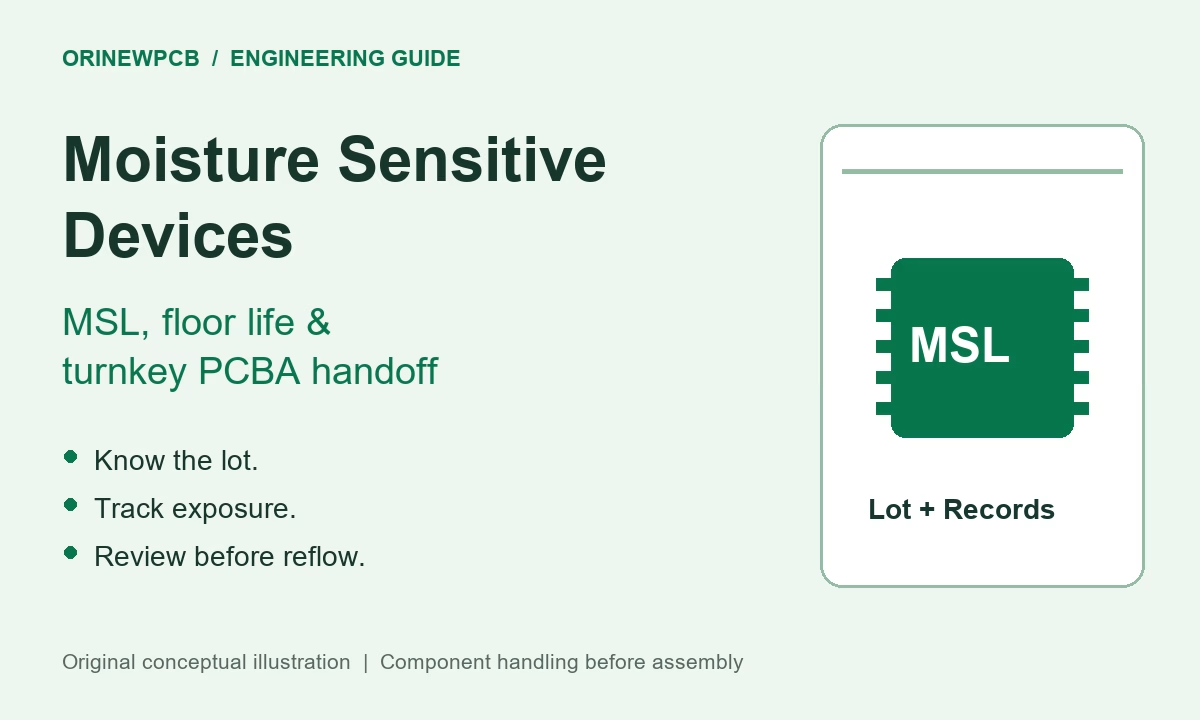
Owning a component does not by itself make it ready for assembly. Discuss its identity, quantity, packaging and condition with the provider before sending the kit.
- Label the part number and the relevant BOM lines.
- State the supplied count, package format and lot information required by your project.
- Preserve applicable handling and storage information with the materials.
- Identify loose, cut-tape, previously opened, programmed or otherwise exceptional items.
- Agree receipt checks, any repackaging or preparation, and how discrepancies will be reported.
- Confirm the treatment of unused, extra or rejected materials after the build.
Ask whether the actual packaging suits the planned SMT assembly process or needs additional handling. Define the extra work and cost in the quote.
4. Plan material readiness and shortage decisions
A shared-sourcing build depends on both material streams. Track supplier purchases and customer shipments against the same target date. If one required item is missing, confirm the available options with the team.
Define who can approve a substitute, whether a partial build is acceptable, and how changes affect cost, tests and schedule. Do not treat a proposed alternative as approved simply because it appears available.
For prototype and repeat batches, specify separate quantities. Review leftover stock and the approved revision before placing another purchase. Use the prototype-to-production release checklist to align files and materials.
5. Compare the total build scope
Partial turnkey may use inventory you already own, but it also introduces shipping and coordination costs. Compare the complete project with full turnkey, using the same board revision, quantity and acceptance requirements.
| Category | What to confirm |
|---|---|
| PCBs and purchased parts | Included items, material responsibility, approved alternatives and purchasing quantities. |
| Supplied-part preparation | Receipt checks, labeling, repackaging or other agreed preparation and handling charges. |
| Setup and assembly | Stencil/tooling, setup, assembly sides, manual tasks and first-article requirements. |
| Programming and tests | Firmware, fixture preparation, procedure, coverage, acceptance criteria and records. |
| Material and delivery logistics | Customer shipment, agreed arrival dates, packaging, delivery terms and remaining inventory treatment. |
| Open assumptions | Quote validity, unresolved shortages, exclusions and decisions affecting price or schedule. |
For the individual cost categories, read the PCB assembly cost breakdown. A lower assembly charge may exclude materials or preparation that another quote includes.
Partial turnkey purchasing questions
Can I supply only the expensive or proprietary parts?
You can propose that split. Identify the exact BOM lines, quantities and packaging so the provider can review the remaining sourcing and assembly requirements.
Who supplies the bare PCBs?
Specify this explicitly. Partial turnkey can include provider-fabricated boards or customer-supplied boards, depending on the agreement. Match any supplied boards to the released fabrication and assembly revision.
Is partial turnkey always cheaper than full turnkey?
No. Compare the complete material, shipping, preparation, assembly and test costs. Existing stock can be useful, but packaging or shortage issues can add work.
How many extra components should I supply?
Ask for a project-specific material allowance before shipment. The required quantity depends on the part, packaging and agreed process; a single universal percentage is not a reliable kit rule.
Does the sourcing model change functional test coverage?
Test coverage should be specified separately. Provide firmware, test instructions, fixture needs and pass/fail criteria, regardless of who supplies the parts.
What happens if a customer-supplied part is missing?
Agree on shortage reporting, replacement responsibilities and approval for alternatives or partial builds. Confirm any effect on the price and schedule before proceeding.
Request a quote with a clear material split
Send OrinewPCB your Gerber files, BOM, placement data, quantities and target date. Mark the BOM lines you will supply and include their quantity, packaging and arrival date. Specify the inspection, programming and functional tests needed.
Inquiry example: “Partial turnkey PCBA; [quantity and revision]; we supply [BOM lines and counts]; arrival [date]; please source the remaining BOM and fabricate the boards; [test requirements]; target [date and destination]. Please also quote full turnkey for comparison.”
Review full and partial turnkey services · Discuss BOM sourcing
Files can follow by email at [email protected]. Final price and schedule follow a review of the complete build requirements.
Related Posts
ORINEWPCB · PROJECT SUPPORT
Contact Us
Discuss your PCB assembly project with our team.
FREE QUOTE
Plan your turnkey PCBA build.
Share your quantity and requirements. Add Gerber files and a BOM when ready.
Files are optional for an initial discussion. Include any assembly, sourcing or testing requirements in your message.