Mastering PCBA Preheating: Key to Solder Joint Success

In the intricate world of modern electronics manufacturing, the production of Printed Circuit Board Assembly(PCBAs) stands as a cornerstone. Every step in this complex process is vital, yet one often underestimated phase—the preheating stage—holds profound implications for the final product’s quality and reliability. While seemingly basic, proper preheating is a critical determinant of successful soldering, impacting everything from solder joint integrity to component longevity. Ignoring or improperly executing this stage can lead to a cascade of defects, compromising the performance of electronic devices. This article delves into the essential role of the preheating phase in PCBA processing, exploring its benefits, the risks of neglecting it, and how to optimize it for superior results in electronics manufacturing.
1. What is Preheating in PCBA?
Preheating is the controlled process of gradually raising the temperature of a Printed Circuit Board(PCB) and its mounted components to a specific, elevated level before the actual soldering or reflow process begins. This isn’t about haphazardly heating the board, but rather a carefully managed thermal ramp-up designed to achieve uniform temperature distribution across the entire assembly. Essentially, it prepares the PCB and its components for the higher temperatures they will experience during the s older reflow process. In the context of mass-produced PCBA processing, temperature profiling, which includes the slow heating and preheating stages, is a widely understood and critical aspect. It sets the stage for optimal conditions, ensuring that when the board enters the high-temperature zones of a reflow oven, it reacts predictably and consistently, paving the way for flawless PCBA soldering.
2. Why Preheating is Indispensable for PCBA Quality?
The preheating phase is far from a mere preliminary step; it is a fundamental requirement for achieving high-quality, durable solder joints and ensuring the long-term reliability of electronic products. Its importance stems from several critical functions it performs:
| Benefit | Explanation | Impact on PCBA Quality |
| Prevents Thermal Shock | Components and the PCB substrate are susceptible to damage from rapid temperature changes. Preheating gradually raises the temperature, minimizing stress. | Reduces component cracking, delamination, and warpage of the PCB, ensuring structural integrity. |
| Activates Flux | Soldering paste contains flux, which cleans oxides from component leads and pads. Preheating brings the flux to its activation temperature. | Ensures effective cleaning, leading to better wetting of solder and stronger, void-free solder joints. |
| Evaporates Volatiles | The solvents in solder paste need to evaporate slowly to prevent “solder balling” and voiding during reflow. | Minimizes defects like solder balls, voids, and bridging, enhancing joint reliability and appearance. |
| Achieves Uniform Temperature | Different components and board areas have varying thermal masses. Preheating ensures the entire assembly reaches a consistent temperature. | Promotes simultaneous melting of solder paste across all joints, preventing “cold” joints or components reflowing too early/late. |
| Improves Solder Joint Quality | By preparing the surfaces and ensuring consistent temperature, preheating facilitates optimal solder flow and joint formation. | Results in robust, shiny, and reliable solder joints with excellent mechanical and electrical properties. |
Without these critical functions, the subsequent soldering process would be prone to numerous defects, significantly undermining the reliability and lifespan of the PCBA. The gradual and controlled temperature increase during preheating is a non-negotiable step for achieving superior solder joint quality.
3. The Perils of Skipping Preheating
While the benefits of preheating are clear, the consequences of neglecting or improperly executing this phase can be severe and costly. Skipping the preheating stage, especially in rework, prototyping, or first-piece proofing projects where expediency might tempt operators to cut corners, can lead to a multitude of defects:
- Thermal Shock Damage:Directly exposing a cold PCB assembly to high soldering temperatures creates immense thermal stress. This can cause components to crack, especially sensitive ones like ceramic capacitors or large ICs, and can lead to delamination of the PCB layers.
- Poor Wetting and Insufficient Solder Joints:Without proper flux activation, the solder paste won’t effectively clean the oxidized surfaces of pads and leads. This results in poor wetting, where the solder doesn’t spread properly, leading to weak, brittle, or incomplete solder joints that are prone to failure.
- Solder Balls and Voids:Rapid heating without proper preheating can cause the volatile solvents in the solder paste to evaporate explosively. This can lead to solder balls forming around the component leads and voids or entrapped gases within the solder joints, both of which compromise reliability.
- Bridging and Shorts:Inconsistent temperatures across the board can cause some areas to reflow too quickly while others lag. This can lead to solder bridging between closely spaced pads, resulting in electrical shorts.
- Component Tombstoning:A common defect where small, two-terminal components(resistors, capacitors) stand on one end due to uneven wetting and surface tension forces, often caused by non-uniform heating.
- Decreased Reliability and Lifespan:Ultimately, any of these defects compromise the mechanical and electrical integrity of the PCBA, leading to premature failures in the field, increased warranty claims, and significant reputational damage.
These issues underscore why preheating is not an optional luxury but a fundamental necessity for robust PCBA processing.
4. Optimizing the Preheating Phase: Key Considerations
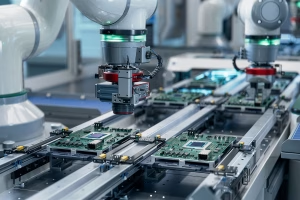
Achieving an optimal preheating profile requires careful consideration of several factors, ensuring the delicate balance between effective preparation and avoiding damage. The goal is to gradually reach a target temperature while allowing sufficient time for flux activation and solvent evaporation.
4.1 Temperature Profile Management
The temperature profile, often visualized as a reflow oven’s “thermal curve”, is paramount. The preheat zone is typically characterized by a controlled ramp-up rate, usually between 1-3°C per second, aiming to bring the board to a soak temperature. This soak temperature, just below the solder’s melting point, allows for thermal equilibrium across the board and further flux activation. Modern reflow ovens offer multiple preheat zones, allowing for precise control over the ramp rate and dwell time.
4.2 Factors Influencing Preheating Parameters
- PCB and Component Thermal Mass:Larger PCBs or those with dense component arrays(especially large ICs or metal-bodied components) have higher thermal mass and require longer preheat times or higher temperatures to ensure uniform heating.
- Solder Paste Type:Different solder pastes(lead-free vs. leaded) have varying activation temperatures for their flux and different melting points, dictating the target preheat and soak temperatures.
- Component Sensitivity:Some components are more sensitive to rapid temperature changes or prolonged exposure to high temperatures. The preheat profile must be tailored to protect the most sensitive parts.
- Production Volume:For mass production, highly repeatable and optimized preheat profiles are critical. For rework or prototyping, a more flexible approach with localized preheating tools might be necessary, but the principles remain the same.
4.3 Preheating Methods and Equipment
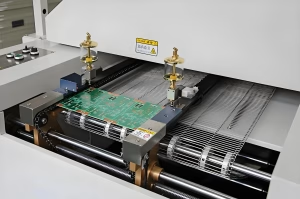
Various methods are employed for preheating, each suited to different production scales and needs:
- Convection Ovens:Commonly used in automated ref low soldering lines, these ovens use hot air circulation to uniformly heat the PCBs. They offer precise temperature control and are ideal for mass production.
- Infrared(IR) Heaters:IR radiation directly heats the PCB surface. While fast, they can sometimes lead to uneven heating due to varying component emissivity, requiring careful profiling.
- Hot Plates:Often used for manual soldering, hot plates provide a heated surface to preheat the underside of the PCB. This is common in rework stations.
- Hot Air Guns/Stations:Used primarily for rework and repair, these devices allow for localized preheating of specific areas of the board. They require skilled operators to prevent thermal damage.
Proper temperature profiling using thermocouples and specialized equipment is essential to monitor and validate the preheat curve, ensuring it meets the specific requirements of the PCBA and solder paste.
5. Preheating in Specialized PCBA Applications
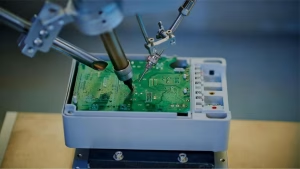
The importance of preheating is amplified in certain specialized PCBA applications where product reliability and performance are absolutely non-negotiable. One prominent example is the medical electronics manufacturing industry. Devices like pacemakers, diagnostic equipment, and surgical tools demand near-perfect product quality and reliability. In these fields, the preheating process is subject to particularly stringent controls and validation. Any defect, no matter how minor, resulting from inadequate preheating—such as a weak solder joint or component damage—could have life-threatening consequences. Therefore, medical electronics manufacturers invest heavily in precise thermal profiling, advanced preheating equipment, and rigorous quality checks to ensure every solder joint meets the highest standards. Similarly, in aerospace and automotive applications, where extreme environmental conditions and long-term durability are critical, the preheating phase is meticulously controlled to guarantee the robust performance of electronic systems.
6. PCBA Preheating FAQs
Question 1: What is the primary purpose of preheating in PCBA processing?
The primary purpose is to gradually raise the temperature of the PCB and components to prevent thermal shock, activate the flux in the solder paste, and ensure a uniform temperature distribution before the main soldering phase, ultimately leading to higher quality solder joints.
Question 2: What happens if I skip the preheating phase?
Skipping preheating can lead to severe defects such as thermal shock damage to components(cracking), poor solder wetting, solder balls, voids within joints, bridging, and component tombstoning, all of which compromise the reliability and lifespan of the PCBA.
Question 3: How hot should the preheating zone be?
The exact temperature varies depending on the solder paste type, component thermal mass, and PCB material. Generally, the preheat zone aims to bring the assembly to a soak temperature just below the solder paste’s melting point, often in the range of 150-180°C for many lead-free applications, with a controlled ramp-up rate.
Question 4: Is preheating as important for rework as it is for mass production?
Yes, absolutely. While it might seem easier to skip for individual repairs or prototypes, neglecting preheating in rework can easily damage surrounding components, lift pads, or create unreliable solder joints, making the repair worse than the original defect.
Question 5: How does improper preheating affect solder joint quality?
Improper preheating can lead to various defects like tombstoning, solder balls, voids, cold solder joints, and insufficient wetting, all of which compromise the reliability and strength of the solder joints.
Question 6: What is “thermal shock” and why is preheating important to prevent it?
Thermal shock is the stress induced in materials due to rapid and uneven temperature changes. Preheating prevents it by gradually increasing the temperature, allowing components and the PCB to expand uniformly and reduce internal stresses.
Question 7: What is the typical ramp rate during the preheating phase?
A typical ramp rate for the preheating phase is usually between 1 to 3 degrees Celsius per second(°C/s), though this can vary based on specific solder paste and component requirements.
7. Summary
The preheating phase is an unsung hero in the complex symphony of PCBA processing. Far from a minor preliminary step, it is a critical stage that profoundly impacts the quality, reliability, and longevity of every electronic product. By carefully managing the thermal ramp-up, activating flux, evaporating volatiles, and ensuring uniform temperature distribution, preheating prevents detrimental thermal shock and sets the stage for flawless solder joint formation. Neglecting this crucial phase, especially in demanding applications like medical electronics, can lead to a host of defects, ultimately compromising product performance and reliability. As electronics manufacturing continues to push boundaries, understanding and optimizing the preheating process remains paramount for creating robust and dependable electronic devices.
Key Takeaways
- Proper preheating is essential for preventing thermal shock to components and the PCB, safeguarding their integrity.
- The preheat phase activates the solder flux, critical for cleaning surfaces and achieving strong, reliable solder joints.
- Controlled evaporation of solvents during preheating minimizes defects like solder balls and voids.
- Uniform temperature distribution across the PCBA, achieved through preheating, is vital for consistent reflow soldering.
- Skipping preheating, even in rework, leads to numerous costly defects and reduced product reliability.
OrinewPCB has focused as a one-stop PCB assembly manufacturer from PCB Manufacturing to Electronic Components Sourcing to PCB Assembly to Test to Program IC for more than 14 Years with reliable quality and fastest delivery for global clients.