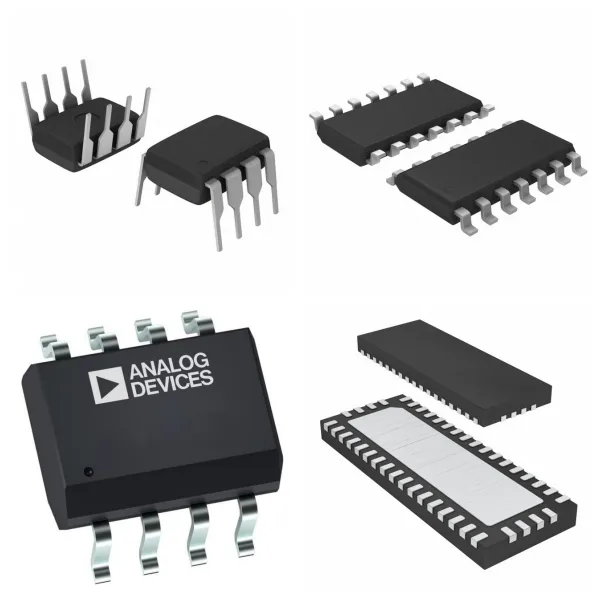
<h1> Linear </h1> <h2> 1. What are Linear ICs? </h2> <p> Linear ICs refer to integrated circuits that process analog signals and have a linear relationship between input and output. These devices process continuous signals by amplification, voltage/current regulation, or filtering, and the output signal maintains a proportional relationship with the input signal without changing the original waveform. Unlike digital integrated circuits, linear ICs focus on high-precision control of analog signals. </p> <h2> </h2> <h2> 2. What are the Core Features of Linear ICs? </h2> <p> <strong>Linear Transmission Characteristics</strong> </p> <p> The input and output signals strictly follow a linear proportional relationship (such as Vout=k*Vin) to ensure that the signal processing process is distortion-free. </p> <p> </p> <p> <strong>Stability and Low Noise</strong> </p> <p> The performance is stable underrated working conditions, and suitable for scenarios with high signal accuracy requirements (such as audio amplification and voltage stabilization circuits). </p> <p> </p> <p> <strong>Frequency Response Consistency</strong> </p> <p> The response to different frequency signals within the effective bandwidth remains consistent to avoid frequency distortion. </p> <p> </p> <h2> 3. What are the Main Functions and Applications of Linear ICs? </h2> <table> <tbody> <tr class="firstRow"> <td width="189" valign="top" style="padding: 0px 7px;border-width: 1px;border-color: windowtext"> <p> Function </p> </td> <td width="189" valign="top" style="padding: 0px 7px;border-width: 1px;border-color: windowtext"> <p> Typical Application Scenarios </p> </td> <td width="189" valign="top" style="padding: 0px 7px;border-width: 1px;border-color: windowtext"> <p> Representative Devices </p> </td> </tr> <tr> <td width="189" valign="top" style="padding: 0px 7px;border-left-width: 1px;border-left-color: windowtext;border-right-width: 1px;border-right-color: windowtext;border-top: none;border-bottom-width: 1px;border-bottom-color: windowtext"> <p> Signal Amplification </p> </td> <td width="189" valign="top" style="padding: 0px 7px;border-left-width: 1px;border-left-color: windowtext;border-right-width: 1px;border-right-color: windowtext;border-top: none;border-bottom-width: 1px;border-bottom-color: windowtext"> <p> Audio Equipment (speakers, headphones, power amplifiers) </p> </td> <td width="189" valign="top" style="padding: 0px 7px;border-left-width: 1px;border-left-color: windowtext;border-right-width: 1px;border-right-color: windowtext;border-top: none;border-bottom-width: 1px;border-bottom-color: windowtext"> <p> Operational Amplifier </p> </td> </tr> <tr> <td width="189" valign="top" style="padding: 0px 7px;border-left-width: 1px;border-left-color: windowtext;border-right-width: 1px;border-right-color: windowtext;border-top: none;border-bottom-width: 1px;border-bottom-color: windowtext"> <p> Voltage/Current Regulation </p> </td> <td width="189" valign="top" style="padding: 0px 7px;border-left-width: 1px;border-left-color: windowtext;border-right-width: 1px;border-right-color: windowtext;border-top: none;border-bottom-width: 1px;border-bottom-color: windowtext"> <p> Power Supply Voltage Regulator Circuit, Sensor Signal Conditioning </p> </td> <td width="189" valign="top" style="padding: 0px 7px;border-left-width: 1px;border-left-color: windowtext;border-right-width: 1px;border-right-color: windowtext;border-top: none;border-bottom-width: 1px;border-bottom-color: windowtext"> <p> Linear Regulator (LDO) </p> </td> </tr> <tr> <td width="189" valign="top" style="padding: 0px 7px;border-left-width: 1px;border-left-color: windowtext;border-right-width: 1px;border-right-color: windowtext;border-top: none;border-bottom-width: 1px;border-bottom-color: windowtext"> <p> Filtering </p> </td> <td width="189" valign="top" style="padding: 0px 7px;border-left-width: 1px;border-left-color: windowtext;border-right-width: 1px;border-right-color: windowtext;border-top: none;border-bottom-width: 1px;border-bottom-color: windowtext"> <p> Noise Suppression, Signal Extraction (such as a low-pass filter) </p> </td> <td width="189" valign="top" style="padding: 0px 7px;border-left-width: 1px;border-left-color: windowtext;border-right-width: 1px;border-right-color: windowtext;border-top: none;border-bottom-width: 1px;border-bottom-color: windowtext"> <p> Active Filter IC </p> </td> </tr> <tr> <td width="189" valign="top" style="padding: 0px 7px;border-left-width: 1px;border-left-color: windowtext;border-right-width: 1px;border-right-color: windowtext;border-top: none;border-bottom-width: 1px;border-bottom-color: windowtext"> <p> Signal Comparison and Conversion </p> </td> <td width="189" valign="top" style="padding: 0px 7px;border-left-width: 1px;border-left-color: windowtext;border-right-width: 1px;border-right-color: windowtext;border-top: none;border-bottom-width: 1px;border-bottom-color: windowtext"> <p> Analog Switch, Analog-to-digital Conversion Interface </p> </td> <td width="189" valign="top" style="padding: 0px 7px;border-left-width: 1px;border-left-color: windowtext;border-right-width: 1px;border-right-color: windowtext;border-top: none;border-bottom-width: 1px;border-bottom-color: windowtext"> <p> Voltage Comparator </p> </td> </tr> </tbody> </table> <p> </p> <h2> 4. Positioning of Linear ICs in Electronic Systems </h2> <p> <strong>Relationship with Passive Components</strong>: Linear ICs often work with linear passive components such as resistors, capacitors, and inductors to form a complete analog circuit system. </p> <p> <strong>Distinguishing from Nonlinear Components</strong>: Unlike nonlinear components such as diodes and transistor switching circuits, linear ICs work in the amplification area rather than the switching state to maintain signal continuity. </p> <p> <strong>Technological Evolution</strong>: As the core branch of analog ICs, its process and packaging technology are continuously optimized to meet the requirements of high integration and low power consumption (such as CMOS process linear ICs). </p> <p> </p> <h2> 5. Linear ICs FAQs </h2> <h3> 1) What are the key factors affecting linearity? </h3> <p> <strong>Device Characteristics</strong>: transistor threshold voltage drift, nonlinear effects of parasitic capacitance/resistance. </p> <p> <strong>Working Conditions</strong>: bias voltage stability, and saturation distortion caused by excessive input signal amplitude. </p> <p> <strong>Process Deviation</strong>: parameter fluctuations during the manufacturing process affect consistency. </p> <p> </p> <h3> 2) Why are Linear ICs less efficient? How to optimize? </h3> <p> When linear ICs (especially linear power supplies) step down the voltage through a series regulator, the excess energy is dissipated as heat energy, and the efficiency is usually 50%~80%. </p> <p> <strong>Optimization Direction</strong>: Use low-dropout regulators (LDOs) to reduce voltage drop losses; heat dissipation design needs to be strengthened in high-temperature scenarios. </p> <p> </p> <h3> 3) What are the typical failure modes of Linear ICs? </h3> <p> <strong>Overheating Failure</strong>: Long-term overload or insufficient heat dissipation leads to thermal breakdown (accounting for more than 15% of failures). </p> <p> <strong>Parameter Drift</strong>: Temperature changes cause resistance/capacitance value offsets, affecting amplification accuracy. </p> <p> <strong>Interface Failure</strong>: Aging of solder joints and corrosion of pins lead to poor contact. </p> <p> </p> <h2> 6. Summary </h2> <p> Linear ICs are the cornerstone of analog electronic systems. With their high-precision signal processing capabilities, they are widely used in consumer electronics, industrial control, communication equipment, and other fields. Their design focuses on maintaining the linear fidelity of signals, complementing the functions of digital ICs, and jointly supporting the operation of modern electronic devices. </p> <p> </p> <p>
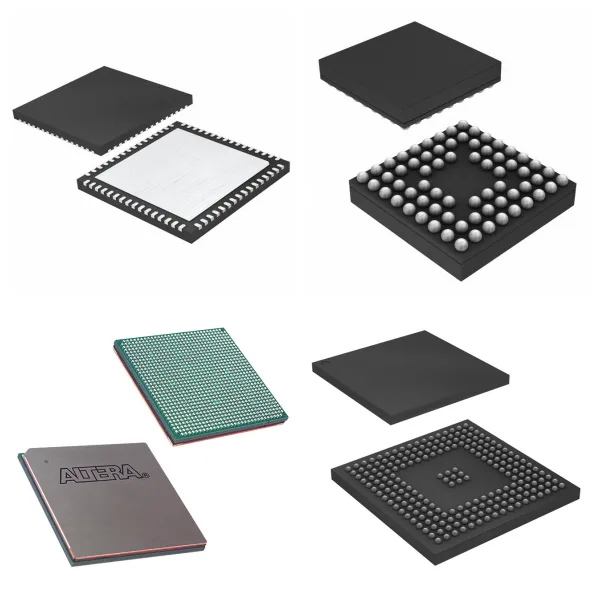
<h1> Embedded </h1> <p> Embedded systems are application-centric, dedicated computing systems built on modern computer technology, and meet specific functional requirements (such as real-time, reliability, low cost, low power consumption, etc.) through software and hardware collaborative design. </p> <p> </p> <h2> 1. What are the Core Features of Embedded System? </h2> <p> <strong>Specialization</strong>: Customized for specific devices or scenarios (such as automotive control units, and smart home devices), highly integrated with software and hardware, and cannot be expanded to a general computing platform. </p> <p> <strong>Embeddability</strong>: Integrated as a subsystem into larger mechanical or electrical equipment to achieve control, monitoring, or auxiliary operation functions. </p> <p> </p> <h2> 2. What are the Core Components of Embedded System? </h2> <p> <strong>Embedded systems consist of two parts: hardware and software</strong>: </p> <p> </p> <h3> 1) Hardware: </h3> <p> <strong>Processor</strong>: Microcontroller (MCU) or microprocessor (MPU) as the core. </p> <p> <strong>Memory</strong>: ROM, RAM, and emerging embedded storage technologies (such as MRAM, ReRAM, PCM), with high durability and low power consumption; traditionally, small-capacity media such as E-PROM and EEPROM are used. </p> <p> <strong>I/O Interface</strong>: Connect peripheral devices such as sensors and displays. </p> <p> </p> <h3> 2) Software: </h3> <p> Lightweight operating system or firmware, with API programming interface as the core of development, and low resource consumption. </p> <p> </p> <h2> 3. What are the Key Features of Embedded System? </h2> <p> <strong>Real-time</strong>: Most tasks need to be responded to under strict time constraints (such as industrial control). </p> <p> <strong>Resource Constraints</strong>: Limited processor performance, storage space, and energy consumption budget. </p> <p> <strong>High Reliability</strong>: Adapt to scenarios with zero tolerance for failures such as industry and medical care. </p> <p> </p> <h2> 4. What is an Embedded System Used for? </h2> <p> <strong>Embedded systems have penetrated into many industries</strong>: </p> <p> <strong>Automotive Electronics</strong>: Engine control, ADAS system. </p> <p> <strong>Industrial Automation</strong>: PLC controller, robot. </p> <p> <strong>Internet of Things and Edge Computing</strong>: Smart sensors, gateway devices and edge AI reasoning. </p> <p> <strong>Consumer Electronics</strong>: Smart home, wearable devices. </p> <p> </p> <h2> 5. Technology Trends of Embedded System </h2> <p> <strong>Embedding of Emerging Storage Technologies</strong>: MRAM, ReRAM, etc. are accelerated to be integrated into embedded systems due to their high speed and low power consumption characteristics, helping edge AI and other scenarios. </p> <p> <strong>Heterogeneous Computing Fusion</strong>: FPGA is combined with embedded processors to improve real-time processing capabilities (such as high-frequency signal analysis). </p> <p> </p> <p> As the "invisible brain" of intelligent devices, embedded systems continue to promote innovations in the fields of the Internet of Things, Industry 4.0, and artificial intelligence. Its specialized design and non-universal architecture (different from the von Neumann system) make it an indispensable underlying support for modern electronic devices. </p> <p>
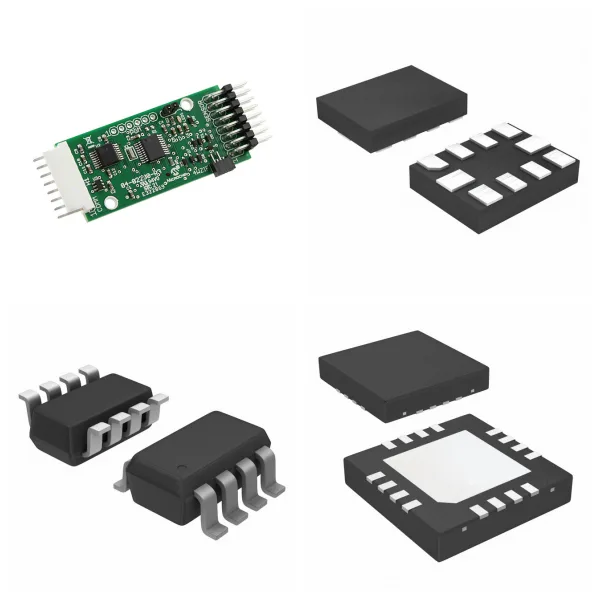
<h1> Data Acquisition </h1> <h2> 1. What is Data Acquisition (DAQ)? </h2> <p> Data acquisition (DAQ) refers to the process of automatically collecting analog signals (such as temperature, pressure, voltage and sound) or digital signals in the physical world through sensors or devices under test and converting them into digital data that can be processed by computers. Its core is to quantify continuous physical quantities into discrete digital signals, providing a basis for subsequent analysis, storage, and control. </p> <p> </p> <h2> 2. What are the Core Components of DAQ System? </h2> <h3> 1) Sensors and Transducers </h3> <p> Convert non-electrical physical signals (such as temperature and pressure) into measurable electrical signals (voltage/current). </p> <p> </p> <h3> 2) Signal Conditioning Module </h3> <p> Amplify, filter, isolate, and process the original signal to ensure acquisition accuracy. </p> <p> </p> <h3> 3) Data Acquisition Equipment </h3> <p> <strong>Acquisition Card (DAQ Card)</strong>: core hardware with built-in analog-to-digital converter (ADC), responsible for converting analog signals into digital quantities. </p> <p> <strong>Interface Type</strong>: supports PCI, USB, Ethernet, etc. to realize data transmission with the computer. </p> <p> </p> <h3> 4) Computer and Software </h3> <p> <strong>Driver Engine</strong>: coordinates communication between hardware and operating system (such as NI-DAQmx). </p> <p> <strong>Application Software</strong>: Provides data analysis, visualization, and control functions (such as LabVIEW). </p> <p> </p> <h2> 3. Technical Features and Selection Keys of Data Acquisition </h2> <p> <strong>Sampling Rate and Accuracy</strong>: The signal restoration capability is determined by the number of ADC bits (such as 16-bit) and the sampling speed (Samples/sec). </p> <p> <strong>Synchronization and Control</strong>: Supports trigger signals, counters/timers to meet the timing requirements of complex scenarios. </p> <p> <strong>Scalability</strong>: Compatible with multi-channel input, digital I/O (DIO), and bus synchronization (such as PXI). </p> <p> </p> <h2> 4. What is Data Acquisition Used for? </h2> <p> <strong>Industrial Automation</strong>: Production line equipment status monitoring and control. </p> <p> <strong>Scientific Research Experiments</strong>: High-precision physical/chemical signal acquisition and analysis. </p> <p> <strong>Environmental Monitoring</strong>: Real-time acquisition of parameters such as temperature, humidity, and air pressure. </p> <p> </p> <p> <strong>Consumer Electronics</strong>: Embedded data acquisition such as microphones and cameras. </p> <p> </p> <h2> 5. Development Trend of Data Acquisition </h2> <p> Modern DAQ systems deeply integrate network communications and cloud platforms, support remote monitoring and real-time data analysis, and adapt AI algorithms to improve automated decision-making capabilities. </p> <p> </p> <h2> 6. Data Acquisition FAQs </h2> <h3> 1) What are the core components of data acquisition? </h3> <p> Mainly includes sensors (pressure, temperature, humidity, etc.), signal conditioning devices (such as precision amplifiers and filters), analog-to-digital converters (ADCs), and isolation barriers (used to eliminate noise and ground interference). </p> <p> </p> <h3> 2) How to ensure the accuracy of signal acquisition? </h3> <p> An isolated precision signal chain design (such as using transformers or optical couplers) is required to eliminate common-mode voltage changes, ground loops, and electromagnetic interference (EMI) while protecting sensitive components from voltage spikes. </p> <p> </p> <h3> 3) What are the key parameters for sensor selection? </h3> <p> It is necessary to pay attention to the range (such as pressure sensors covering -14.5 to 10,000 PSI), interface type (USB/Ethernet), environmental adaptability (temperature/humidity range), and whether anti-interference design is required. </p> <p>
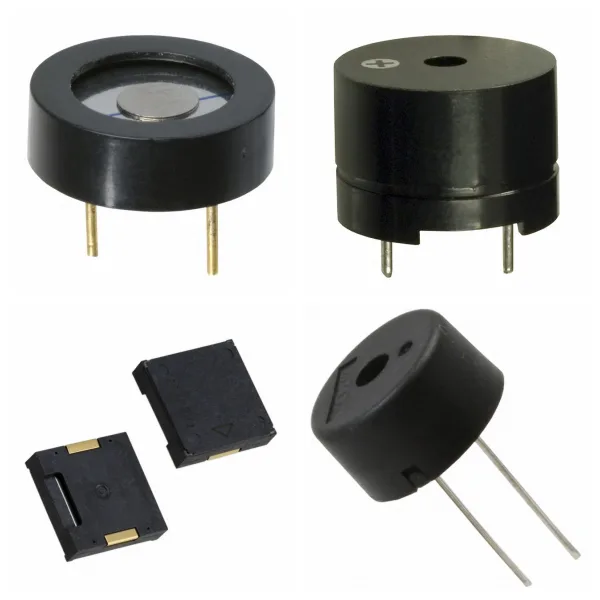
<h1> Audio Special Purpose </h1> <h2> 1. What are Audio Special Purpose ICs? </h2> <p> Audio Special Purpose ICs are integrated circuits designed for audio signal processing, including core functional modules such as audio codec (CODEC), digital signal processor (DSP), amplifier, mixer, etc., covering the entire link of audio signal acquisition, conversion, processing, and output. This type of chip achieves application requirements such as high-definition voice capture and multi-channel output through analog signal input, A/D conversion, digital processing (such as noise reduction and equalization), and D/A conversion. </p> <p> </p> <h2> 2. What are the Main Types of Audio Special Purpose ICs? </h2> <p> <strong>Audio Codec (CODEC)</strong> </p> <p> Mainly responsible for analog-to-digital conversion (ADC) and digital-to-analog conversion (DAC), which directly affects the quality of analog input and output. For example, the AC107 chip supports multi-microphone array input and is suitable for speech recognition scenarios. </p> <p> </p> <p> <strong>Digital Signal Processor (DSP)</strong> </p> <p> Performs complex algorithm processing on digital audio, such as filtering, sound enhancement, etc. Some high-end models integrate independent programmable microphone bias voltage and amplifier. </p> <p> </p> <p> <strong>Automotive Audio Processor</strong> </p> <p> Optimized for the in-vehicle environment, such as BD37033FV-ME2 and BD37069FV-ME2 support multi-channel output (such as 6 channels), covering power management, interface control, and other functions, and adapting to the low noise and high-reliability requirements of the automotive audio system. </p> <p> </p> <p> <strong>Power Amplifier</strong> </p> <p> Such as the LTC6910 series, it provides high driving capability and is commonly found in portable devices and consumer electronics products. It is necessary to pay attention to the packaging form (such as SOT23-8) and the power supply voltage range. </p> <p> </p> <h2> 3. Interface and Communication Protocol of Audio Special Purpose ICs </h2> <p> <strong>Digital Interface Type</strong> </p> <p> Includes I²S (mainstream audio data transmission bus), PCM (mostly used for data conversion between subsystems), and PDM (microphone recording scenarios). Among them, I²S supports left and right channel separation transmission and can work efficiently with the main control chip. </p> <p> </p> <p> <strong>Control Interface</strong> </p> <p> Such as the I²C bus, used for parameter configuration (such as volume adjustment). </p> <p> </p> <h2> 4. What are Audio Special Purpose ICs Used for? </h2> <p> <strong>Consumer Electronics</strong>: audio processing of headphones, smart speakers, mobile phones, and other devices. </p> <p> <strong>Automotive Electronics</strong>: Car audio, voice assistant, etc. </p> <p> <strong>Industry and Communications</strong>: Conference systems, signal processing of voice recognition equipment. </p> <p> </p> <h2> 5. Design Points for Audio Special Purpose ICs </h2> <p> <strong>Power Supply and Wiring</strong>: Short and wide power leads should be used to reduce impedance and avoid power ripple affecting sound quality. </p> <p> <strong>Interface Layout</strong>: It is recommended to place peripheral interfaces such as headphone jacks on the edge of the PCB for easy plugging and unplugging. At the same time, attention should be paid to the isolation of power supply pins (such as +5V power lines to avoid misconnection). </p> <p> <strong>Anti-interference</strong>: The analog signal path needs to be separated from the digital signal to reduce crosstalk. </p>