How Much Does PCB Assembly Cost? A Turnkey Quote Breakdown

Table of Content
- Start with the complete build scope.
- What should a turnkey PCB assembly cost breakdown include?
- Assembly-only pricing and turnkey PCBA pricing cover different scopes.
- Why do prototype and small-batch unit costs change with quantity?
- What information changes the assembly and test cost?
- How to compare PCB assembly quotations fairly.
- Five practical ways to control turnkey PCBA cost.
- Plan the sample and production quantities together.
- PCB assembly cost FAQ.
- Request a turnkey PCB assembly cost review.
PCB ASSEMBLY COST · A BUYER’S QUOTE GUIDE
Start with the complete build scope.
PCB assembly cost depends on the board specification, BOM, assembly process, quantity and agreed inspection or test requirements. A full turnkey PCBA quotation brings PCB fabrication, component purchasing and assembly into one scope. Stencils, setup, programming, fixtures and delivery arrangements should be identified in the quote.
For a useful price comparison, send the same approved Gerber files, BOM, quantity and test requirements to each supplier. Ask whether the quoted amount covers assembly work alone or the complete turnkey build.
What should a turnkey PCB assembly cost breakdown include?
Separate the bare-board cost, purchased components, assembly work and agreed verification. Ask the supplier to explain one-time preparation charges and the costs that apply to each repeat batch.
Quoted manufacturing total = PCB fabrication + component purchasing + assembly + agreed inspection, programming and testing + preparation charges.
Shipping, taxes, duties and any other charges depend on the quoted delivery terms. Confirm how they are handled before comparing the total project budget.
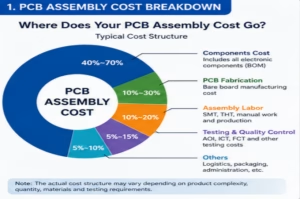
| Cost category | What affects the amount? | What should you confirm? |
|---|---|---|
| PCB fabrication | Board size, quantity, layers, material, copper, finish and fabrication requirements. | Approved revision, panel requirements and the quantity of bare boards supplied. |
| Component purchasing | BOM part numbers, availability, packaging, purchasing minimums and approved alternatives. | Purchased quantities, extra material requirements and how remaining parts will be handled. |
| Assembly work | Placement count, package types, board sides, through-hole operations and handling requirements. | Assembly process and the exact populated or do-not-populate positions. |
| Setup and tooling | Stencil preparation, machine setup, fixture work and other project preparation. | Which charges are one-time, reusable or repeated after a design change. |
| Inspection and tests | Coverage, test time, programming, acceptance criteria and fixture needs. | The inspection or test procedure included in the price. |
| Delivery arrangements | Destination, packaging, shipping method and agreed delivery terms. | Production lead time, shipment arrangements and which additional charges apply. |
On a small screen, scroll the comparison table sideways.
Assembly-only pricing and turnkey PCBA pricing cover different scopes.
Full Turnkey
The supplier coordinates the agreed PCB fabrication, BOM purchasing and assembly. Review test scope, preparation costs and delivery details with the complete quotation.
Partial Turnkey
You supply selected boards or parts and the supplier provides the remaining agreed items. Include the cost and timing of your own materials in the project budget.
Assembly Only
You arrange the boards and components. The assembly charge should be assessed together with those separate purchases, material delivery and the agreed checks.
State your preferred sourcing scope in the inquiry. See the full and partial turnkey responsibility comparison.
Why do prototype and small-batch unit costs change with quantity?
Preparation charges are allocated across the boards in the order. Component purchasing, board fabrication and assembly pricing can also change at different quantities. Request separate quotations for your sample quantity and the next planned batch.
Illustrative arithmetic only: if an assumed preparation charge is US$200 and applies once to the build, its allocation is US$10 per board at 20 boards, US$4 at 50 boards and US$1 at 200 boards. These figures explain allocation; they are not OrinewPCB prices or a total PCBA estimate.
Confirm whether stencils or fixtures can be reused and whether a board, BOM, firmware or process change requires new preparation. Extra component purchases, minimum order quantities and remaining inventory can affect the cash needed for a small build.
Discuss a prototype assembly build → · Plan low volume PCB assembly →
What information changes the assembly and test cost?
Packages and assembly operations
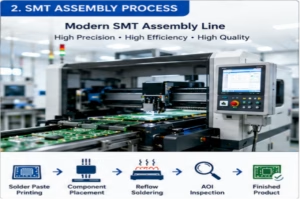
Double-sided SMT, fine-pitch or hidden-joint packages, through-hole parts and manual handling can change the assembly plan. Share package details, placement data, clearances and assembly drawings for a capability and cost review.
Review SMT PCB assembly services →
Inspection and functional requirements
Specify AOI or X-ray coverage where appropriate, firmware loading, test connections and pass/fail criteria. Functional testing may need fixture preparation and a defined procedure. Confirm the included work and its charges.
How to compare PCB assembly quotations fairly.
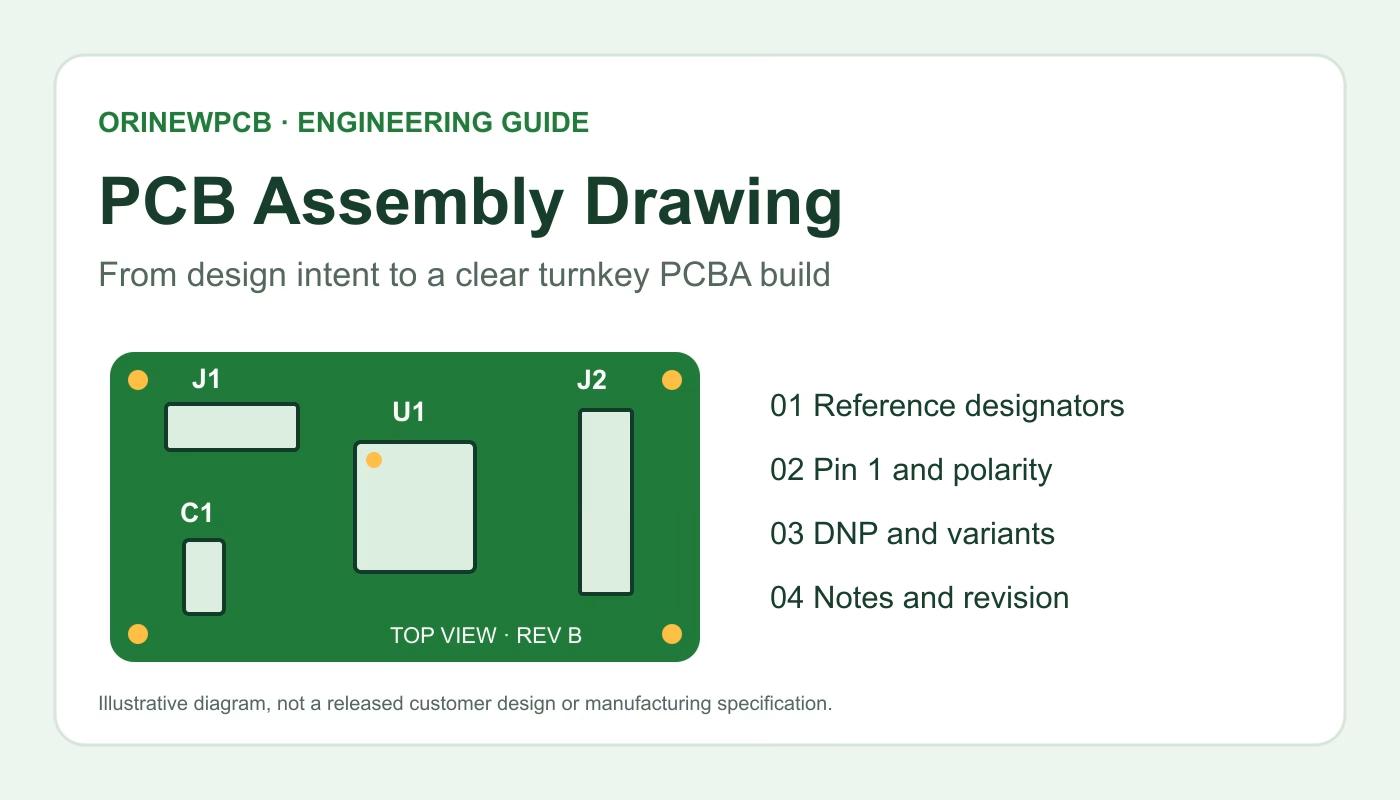
- Use the same approved package. Match Gerber, BOM, CPL and assembly drawings by revision, including fitted and do-not-populate parts.
- Match the supplied quantity. Separate prototype and next-batch quantities and state quantities for each board variant.
- Confirm the sourcing responsibilities. Identify who buys the PCBs and each component. Compare approved substitutions and purchasing quantities.
- Separate preparation and repeat-build charges. Ask about stencil, setup, programming and fixture reuse.
- Match inspection and test coverage. Provide the same acceptance criteria, firmware and test procedure.
- Compare the delivery scope. Confirm material readiness, production timing, destination and quoted shipping terms.
Ask for an explained quotation. A smaller headline assembly charge may cover a narrower scope. Evaluate the complete agreed build, material plan and verification requirements together.
Five practical ways to control turnkey PCBA cost.
- Resolve file and DFM questions before release. Review revision mismatches, placement instructions and manufacturability questions before material purchasing or assembly begins.
- Plan component purchasing early. Identify parts with uncertain availability and design-owner-approved alternatives. Review purchasing minimums and how excess material is handled.
- Quote realistic quantities. Compare the sample build and expected next batch. Consider the budget and risk of unused stock alongside any unit-price reduction.
- Define the required verification. Agree on inspections and functional checks that address the project requirements. Cost comparisons should retain the checks your design needs.
- Control revisions and reusable preparation. Record changes and ask whether existing stencils, fixtures or programming work remain suitable for the repeat build.
CUSTOMER-REPORTED PROJECT EXPERIENCE
Plan the sample and production quantities together.
Rahul’s published feedback describes a build that moved from two sample boards to 50 sets, with DFM review and coordinated material planning. The customer reports delivery on schedule.
Customer feedback dated June 24, 2026. Read the sample-to-batch project summary.
For your own quotation, share both quantities and any revision or test changes between them. This helps define the material purchases and preparation work for each stage.
PCB assembly cost FAQ.
How much does PCB assembly cost per board?
A reliable unit price requires the board files, BOM, quantity and agreed assembly or test scope. Ask for a project quotation with PCB, component, assembly, preparation and verification charges identified. The illustrative setup allocation in this guide is not a total board price.
Does the assembly price include components and bare PCBs?
Check the quotation scope. Full turnkey can combine PCB fabrication, agreed component purchasing and assembly. Assembly-only work uses materials you arrange; partial turnkey divides purchasing responsibilities.
Why can a small order have a higher unit cost?
Applicable preparation charges are spread across fewer boards. Component purchasing minimums and batch-dependent prices can also affect the total. Compare the complete sample and next-batch quotations.
Are stencil and setup charges paid again on a repeat order?
Confirm this with the supplier. Reuse depends on the approved files, stencil condition, process and any design or configuration changes. The quotation should identify applicable repeat-build charges.
Can supplying my own components lower the project cost?
It can change the sourcing scope, but compare the cost of purchasing and delivering your materials, extra quantity requirements, availability and handling. Identify the exact supplied items for a partial turnkey quote.
What files should I send for an accurate PCBA quote?
Send matching Gerber and drill data, a BOM with manufacturer part numbers, CPL or pick-and-place data, assembly drawings, quantity and the sourcing scope. Include target date, destination and inspection, programming or functional test instructions.
GET A QUOTE FOR YOUR BOARD
Request a turnkey PCB assembly cost review.
OrinewPCB coordinates PCB fabrication, BOM sourcing and assembly from Shenzhen, China. Send the sample and planned production quantities so the team can review the complete build scope.
Share your project requirements.
Your email is required. Include quantity, full or partial turnkey scope and required tests. Attach Gerber, BOM and placement files when available.
Files still in progress or upload unavailable? Start with your requirements or email [email protected].
Related Posts
ORINEWPCB · PROJECT SUPPORT
Contact Us
Discuss your PCB assembly project with our team.
FREE QUOTE
Plan your turnkey PCBA build.
Share your quantity and requirements. Add Gerber files and a BOM when ready.
Files are optional for an initial discussion. Include any assembly, sourcing or testing requirements in your message.