
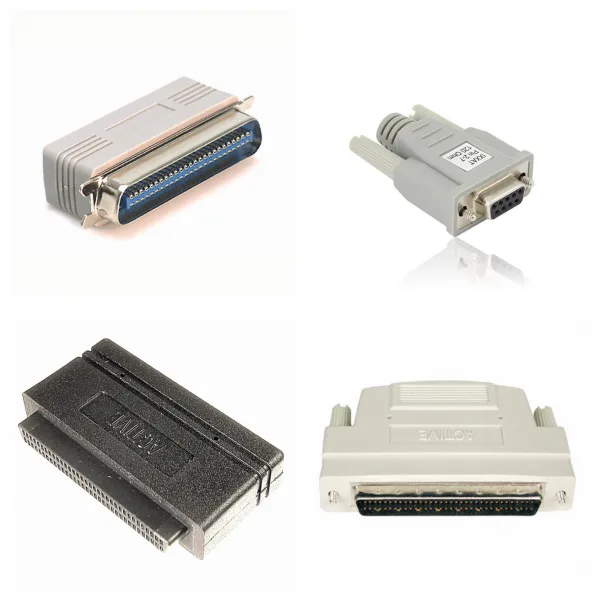
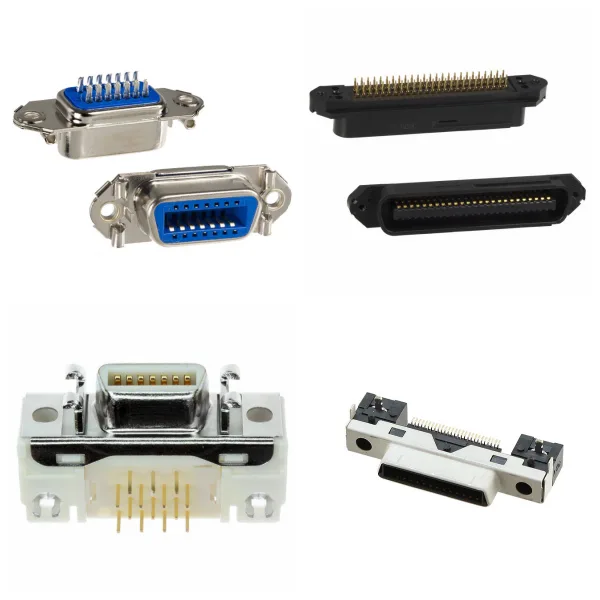
D-Sub, D-Shaped Connectors
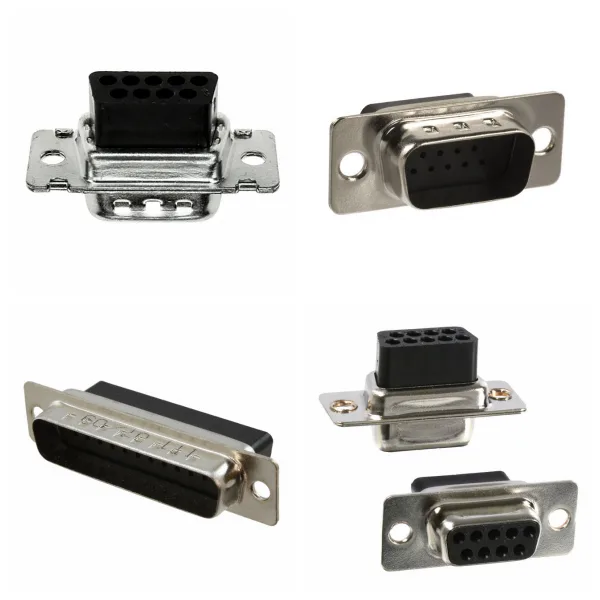
D-Sub (D-shaped) connector is a classic electronic interconnection solution, and its name comes from the unique D-shaped metal shield profile.
1. D-Sub, D-Shaped Connectors Overview
Full Name: D-Subminiature Connector, first created by ITT Cannon in the United States in the 1950s.
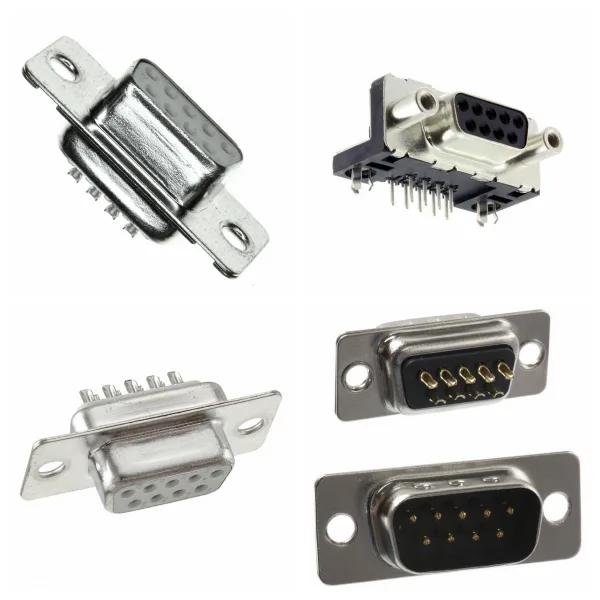
Appearance Features: The shell is in the shape of the letter “D”, and the mechanical anti-misinsertion function is achieved through asymmetric design.
2. What is the Core Structure of D-Sub, D-Shaped Connectors?
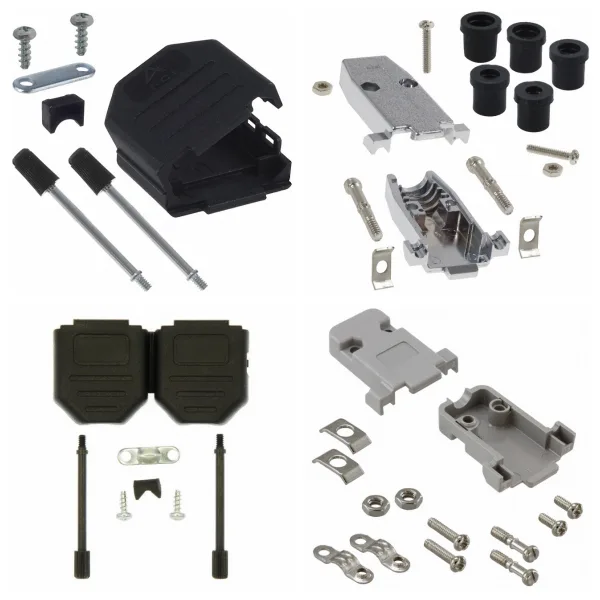
Shell Material: The metal shell provides electromagnetic shielding and mechanical protection, and some models use plastic shells to reduce costs.
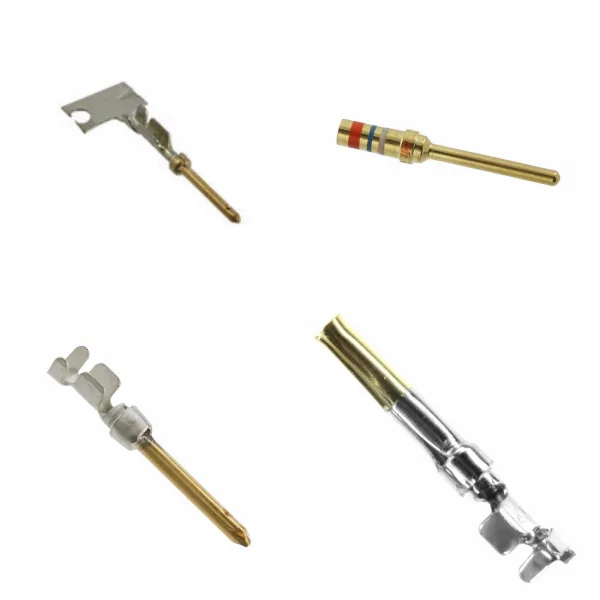
Contact Design: It includes two types: male head (pins) and female head (holes), supporting differential signal transmission to reduce electromagnetic interference.
Pin Density: It was known for its ultra-small size in the early days, and now high-density models have been developed to meet complex wiring needs.
3. Technology Evolution of D-Sub, D-Shaped Connectors
First Generation (1960s)
The double-layer protection structure (metal shell + plastic body) adapts to the harsh environment of aviation and military fields.
Second Generation (mid-1980s)
Stamping technology replaced lathe processing, significantly reducing manufacturing costs and promoting the popularization of computer peripherals.
Third Generation (1990s to Present)
The simplified structure is a single-layer shell, and the models are expanded to DA/DB/DC series to meet the needs of industrial control and medical equipment.
4. Specifications and Applications of D-Sub, D-Shaped Connectors
|
Category |
Typical Specifications |
Main Application Scenarios |
|
Standard |
9-pin, 15-pin, 25-pin |
RS-232 serial port, VGA video interface |
|
High-density |
37-pin and above |
Industrial automation, high-speed data transmission |
|
Hybrid |
High-low frequency composite design |
Aerospace equipment, precision instruments |
5. What are the Key Advantages of D-Sub, D-Shaped Connectors?
Stability: Gold-plated contacts and a multi-point grounding design ensure signal integrity.
Compatibility: Standardized interfaces support cross-generation device interconnection.
Durability: It can withstand more than 500 plug-in and unplug cycles, suitable for frequent maintenance scenarios.
With its modular design, this connector continues to play a key role in industrial control, medical equipment, and communication infrastructure.
6. D-Sub, D-Shaped Connectors FAQs
1) What is the origin of the name D-Sub?
D-Sub stands for “D-Subminiature” and is named for its unique D-shaped shielding cover design. In the early days, it was called an “ultra-miniature” connector because of its miniaturization. Although the volume advantage is no longer prominent, the D-shaped structure still effectively prevents mis-insertion.
2) What are the main application areas of D-Sub connectors?
Computer and Communication Equipment: such as VGA interface, serial port;
Industrial and Military: vibration-resistant design is suitable for aerospace and defense equipment;
Power and Signal Transmission: supports analog, digital, and power signals.
3) What is the difference between high-density D-Sub and standard D-Sub?
High-density D-Sub increases the pin density under the same shell size (such as DB25 shell can accommodate a higher number of pins), which is suitable for compact space requirements, while the standard version has a sparser pin arrangement.
4) How does D-Sub achieve electromagnetic interference (EMI) protection?
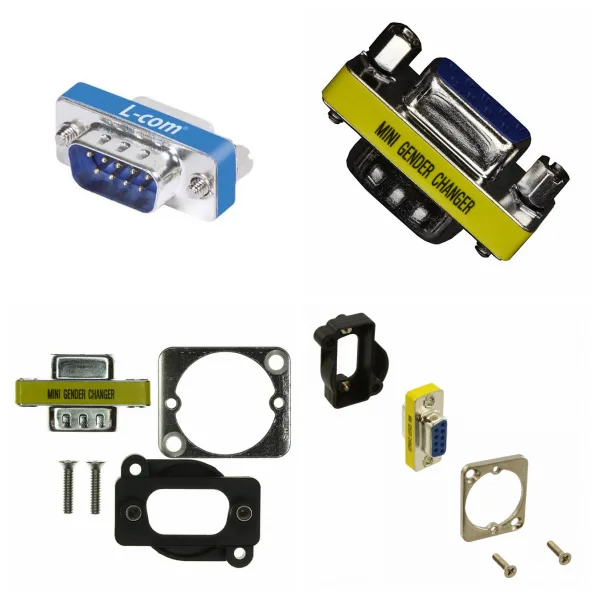
Through metal shell shielding and additional EMI filtering design (such as a Pi-type adapter), it is suitable for sensitive electronic environments.
5) What are the typical installation methods of D-Sub connectors?
Board End Installation: welding or direct plug-in PCB installation;
Cable Assembly: injection molding (non-removable) and assembly (removable metal/plastic back shell);
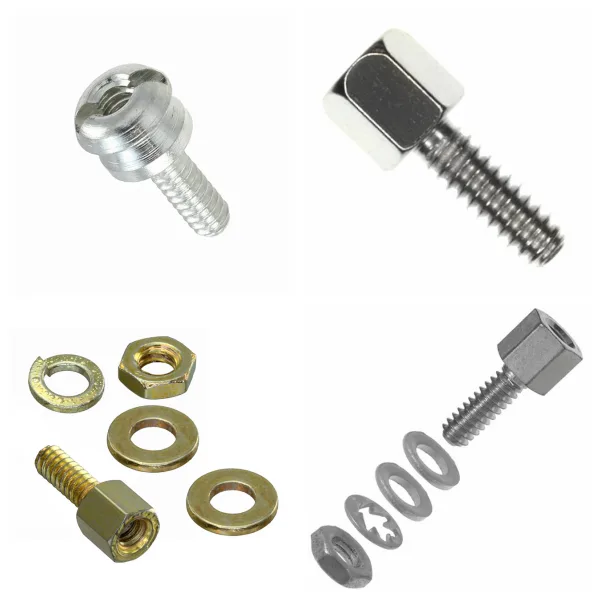
Screw Fixing: ensure a stable connection to prevent accidental detachment.
6) What are the special uses of combined D-Sub connectors?
Combined D-Sub integrates different types of interfaces (such as power + signal) in the same shell, reducing the complexity of the wiring harness and reducing the risk of signal interference.
7) What scenarios are micro D-Sub (Micro-D) suitable for?
Designed for extreme environments (such as aerospace equipment), it is smaller and has a wide temperature range (-55°C to 125°C), suitable for high-density electronic devices.
8) How does the material selection of the D-Sub connector affect its performance?
Metal Housing: Improves shielding and mechanical strength;
Lightweight Aluminum Backshell: For aerospace scenarios where weight reduction is required;
Plastic Insulator: Balances cost and basic protection needs.
9) How is the maintenance and reliability of D-Sub connectors?
The pin and socket contact design supports on-site repairs, and the metal structure ensures long life (especially in vibration environments). Some models have a protection level of IP68 and are suitable for humid or dusty environments.
