The Ultimate Guide to Waterproof PCBs

Table of Content
- 1. What Exactly is a Waterproof PCB?
- 2. The Benefits and Limitations of Waterproof PCBs
- 3. Comprehensive PCB Waterproofing Methods
- 4. Essential Waterproofing Materials and Compounds
- 5. Step-by-Step: How to Waterproof Your PCB
- 6. Ensuring Durability: How to Test a Waterproof PCB
- 7. The Impact of Temperature on Waterproof PCBs
- 8. Removing Conformal Coatings
- 9. Key Considerations for Effective Waterproofing
- 10.FAQs
- 11.Summary
In today’s rapidly evolving technological landscape, electronic devices are increasingly exposed to harsh environments, from industrial settings and outdoor applications to medical devices and consumer electronics. The traditional bare Printed Circuit Board (PCB), while robust in its electrical function, is inherently vulnerable to moisture, humidity, and liquid ingress. These environmental factors can lead to corrosion, short circuits, and ultimately, device failure. This is where the concept of a “Waterproof PCB” becomes not just a feature, but a critical necessity .
A waterproof PCB ensures the long-term reliability and functionality of electronic devices by protecting their delicate circuitry from the damaging effects of water and other liquids. This comprehensive guide delves into every aspect of waterproof PCBs, offering insights into their definition, benefits, limitations, diverse waterproofing methods, crucial material selection, practical application techniques, and essential testing protocols to ensure optimal performance.
1. What Exactly is a Waterproof PCB?
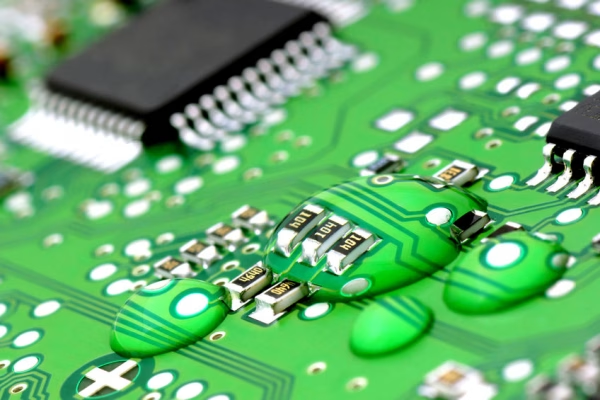
A Waterproof PCB is a standard Printed Circuit Board that has been treated or encased to prevent moisture and other liquids from reaching its conductive traces, components, and solder joints.
It’s important to distinguish between “water-resistant” and “waterproof.” While water -resistant offers protection against splashes or incidental exposure, a truly waterproof PCB is designed to withstand direct contact with water, including submersion, for specified periods without compromising its electrical integrity. This protection typically involves applying specialized coatings or encapsulating the PCB in a protective barrier, thereby sealing off potential entry points for liquids and contaminants.
| Feature | Waterproof PCB | Water-Resistant PCB |
| Definition | Designed to fully prevent water penetration, even when submerged. | Offers limited protection against light moisture or occasional splashes. |
| Protection Level | Complete protection from water, dust, and corrosion. | Partial protection from moisture, condensation, and light exposure. |
| Duration of Exposure | Can withstand long-term immersion in water. | Suitable for short-term or accidental contact with water. |
| IP Rating | Typically rated IP67 or IP68 for full submersion. | Usually rated IP54–IP65, protecting against sprays or splashes. |
| Design Approach | Uses conformal coatings, potting, or sealed enclosures to block all ingress. | Uses thin protective layers or coatings to repel small amounts of water. |
| Applications | Marine electronics, medical implants, outdoor systems, and automotive sensors. | Consumer devices, indoor electronics, and low-humidity environments. |
| Durability | High durability under extreme conditions and varying temperatures. | Moderate durability suitable for controlled environments. |
| Maintenance | Minimal; coatings and seals require little to no upkeep. | May need periodic inspection or recoating over time. |
| Cost | Higher manufacturing cost due to advanced sealing and materials. | More affordable, ideal for general-purpose electronics. |
| Testing Standard | Tested under IEC 60529 for IP68 or similar certification. | Tested for splash and humidity resistance only. |
2. The Benefits and Limitations of Waterproof PCBs
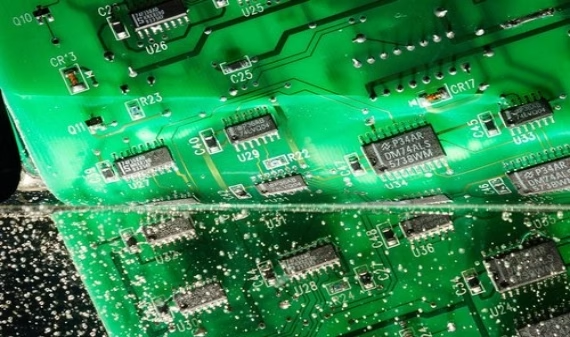
The integration of waterproofing technologies into PCB manufacturing offers a multitude of advantages, significantly enhancing the performance and longevity of electronic devices:
- Enhanced Durability and Reliability:The primary benefit is protection against environmental factors like humidity, condensation, rain, spills, and even full submersion. This prevents corrosion, short circuits, and electrochemical migration, leading to a much longer operational lifespan.
- Extended Product Lifespan:By shielding components from damage, waterproof PCBs reduce the rate of wear and tear, extending the overall service life of the electronic product.
- Improved Performance in Harsh Environments:Devices can function reliably in demanding conditions, such as marine, outdoor, industrial, automotive, and medical applications where exposure to liquids or high humidity is common.
- Reduced Maintenance and Repair Costs:With fewer moisture-related failures, the need for costly repairs or replacements decreases, leading to significant savings over time.
- Increased Safety:Preventing short circuits due to water ingress minimizes the risk of electrical fires or other hazards, especially in high-voltage applications.
- Compliance with Industry Standards:Many industries require specific IP (Ingress Protection) ratings for their devices, and waterproofing is crucial for meeting these standards.
- Greater Design Flexibility:Designers have more freedom to create devices for diverse applications without being limited by environmental concerns.
While the benefits are substantial, it’s crucial to acknowledge the limitations associated with waterproofing PCBs:
- Increased Cost:Waterproofing processes and materials add to the overall manufacturing cost, which can impact the final product price.
- Heat Dissipation Challenges:Encapsulation or thick conformal coatings can trap heat, making thermal management more complex, especially for high-power components.
- Reduced Repairability:Once a PCB is potted or heavily coated, repairing or replacing individual components becomes significantly more difficult, often impossible, without damaging the waterproofing layer or the PCB itself.
- Added Weight and Bulk:Pot ting compounds and enclosures can increase the size and weight of the PCB assembly.
- Material Compatibility:Ensuring compatibility between the waterproofing material, PCB substrate, and components is essential to prevent adverse reactions or degradation over time.
- Application Complexity:Applying coatings or encapsulants requires specialized equipment and expertise to ensure uniform coverage and proper adhesion.
3. Comprehensive PCB Waterproofing Methods
Various methods are employed to waterproof PCBs, each with its advantages and suitable applications:
3.1 Conformal Coating
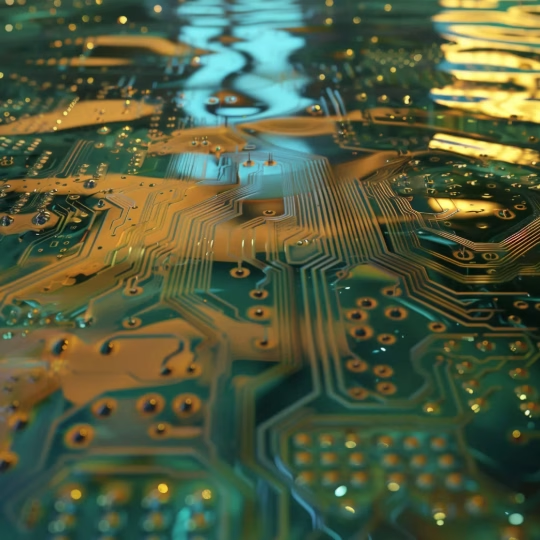
Conformal coating involves applying a thin, protective polymeric film (typically 25-250 µm thick) directly over the PCB and its components. This film “conforms” to the shape of the components, providing a barrier against moisture, dust, chemicals, and temperature extremes. Common types include:
- Acrylics (AR ):Easy to apply and rework, good moisture resistance, but lower solvent resistance.
- Silicones (SR):Excellent flexibility, high-temperature resistance, good moisture protection, but can be difficult to rework.
- Urethanes (UR):Excellent abrasion and chemical resistance, good moisture barrier, but difficult to rework and cure times can be long.
- Epoxies (ER):Very hard, abrasion, and chemical resistant, good for harsh environments, but extremely difficult to rework and can be brittle.
- Parylene (XY):Applied via a vacuum deposition process, creating an extremely thin (often <10 µm), uniform, pin hole-free coating that offers superior chemical, moisture, and dielectric protection. Very expensive and hard to rework.
Application methods for conformal coatings include spraying, dipping, brushing, and selective robotic coating.
3.2 Potting and Encapsulation
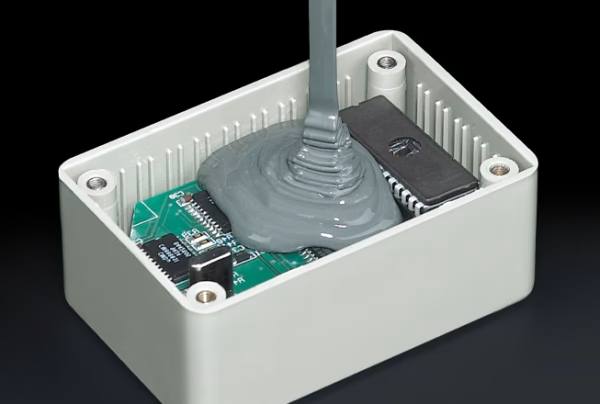
Potting involves filling a housing or enclosure containing the PCB with a liquid resin that cures into a solid, protective mass. Encapsulation is similar but often involves immersing the PCB directly into a mold filled with resin. This method offers robust protection against severe environmental conditions, impact, and vibration. Common potting compounds include epoxies, silicones, and polyurethanes. The main drawback is the irreversible nature and potential heat dissipation issues.
3.3 Nano-coatings (e.g., ALD)
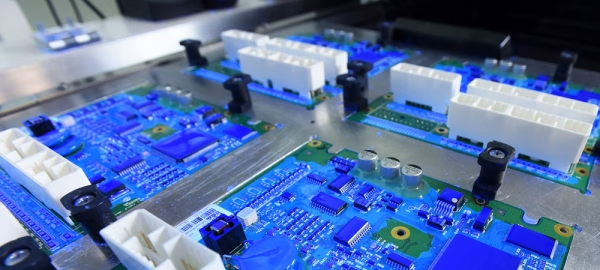
Atomic Layer Deposition (ALD) and similar nano-coating techniques create ultra-thin, highly conformal, and pin hole-free protective layers at the atomic level. These coatings offer exceptional barrier properties against moisture and chemicals without significantly adding to the board’s weight or dimensions. They are particularly suitable for miniaturized electronics and complex geometries but come with higher costs and specialized application processes.
3.4 Waterproof Enclosures
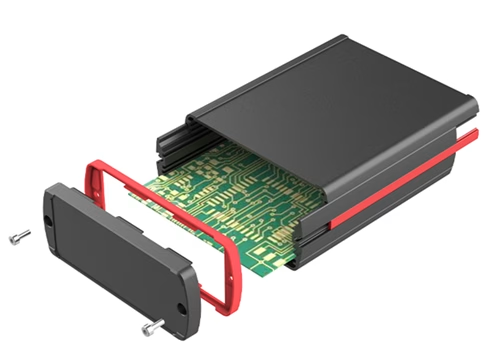
While not a direct PCB waterproofing method, using a well-sealed, IP-rated enclosure is often the first line of defense. The enclosure physically isolates the PCB from the external environment. This method is typically combined with internal PCB coating for comprehensive protection, especially where condensation inside the enclosure might still pose a threat.
4. Essential Waterproofing Materials and Compounds
The choice of waterproofing material is critical and depends on the application’s specific requirements, including the level of protection needed, operating temperature, chemical exposure, and budget. Here’s a comparison of common materials:
| Material Type | Key Characteristics | Application Method | Advantages | Disadvantages |
| Acrylics (AR) | Therm oplastic, transparent, good dielectric properties | Spray, Dip, Brush | Easy to rework, good moisture resistance, affordable | Lower solvent resistance, limited temperature range |
| Silicones (SR) | Elastomeric, flexible, high-temperature stability | Spray, Dip, Brush | Excellent flexibility, high temp. resistance, good moisture barrier | Difficult to rework, higher cost than acrylics, sticky surface |
| Urethanes (UR) | Hard, abrasion-resistant, good chemical resistance | Spray, Dip, Brush | Excellent abrasion & chemical resistance, strong bond | Difficult to rework, longer cure times, less flexible |
| Epoxies (ER) | Very hard, rigid, excellent chemical resistance | Spray, Dip, Potting | Superior chemical & abrasion resistance, robust protection | Extremely difficult to rework, brittle, potential for stress on components |
| Parylene (XY) | Ultra-thin, pinhole-free, chemically inert | Vacuum Deposition | Best chemical, moisture, & dielectric protection, uniform coating | High cost, specialized equipment, very difficult to rework |
| Potting Compounds | Epoxy, Silicone, Polyurethane resins | Pour, Disp ense | Maximum protection against impact, vibration, & liquids; robust | Irreversible, difficult thermal management, adds weight/bulk |
5. Step-by-Step: How to Waterproof Your PCB
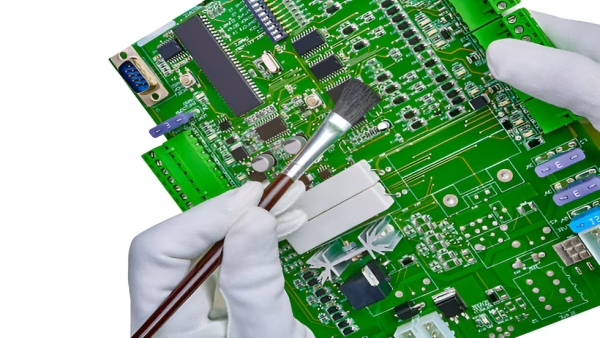
Effective waterproofing requires meticulous preparation and application. Here’s a general guide:
(1)Cleaning: Thoroughly clean the PCB to remove all contaminants, flux residues, dust, and oils. Use appropriate cleaning agents (e.g., isopropyl alcohol, specialized PCB cleaners) and ensure the board is completely dry before proceeding. Any residual contaminants can compromise coating adhesion.
(2)Masking: Protect areas that should not be coated, such as connectors, test points, LEDs, and specific heat sinks. Use masking tapes, boots, or liquid maskants.
(3)Application:
- Conformal Coating:Apply the chosen coating via spraying, dipping, or brushing. For spray applications, ensure even coats with multiple thin layers rather than one thick layer to avoid bubbles and ensure proper curing. Dip coating provides excellent coverage but requires careful control of withdrawal speed.
- Potting/Encapsulation:Place the PCB in its enclosure or mold. Carefully mix the two-part potting compound according to manufacturer instructions. Slowly pour the compound, ensuring no air bubbles are trapped , and allow it to flow around all components. Vacuum degassing might be required for critical applications.
(4)Curing: Allow the coating or potting compound to cure fully according to the manufacturer’s specifications. This may involve air drying, heat curing, or UV curing, depending on the material. Proper curing is essential for achieving optimal protective properties.
(5)Inspection: Visually inspect the coated or potted PCB for complete coverage, uniformity , adhesion, and absence of defects like bubbles, cracks, or uncovered areas.
6. Ensuring Durability: How to Test a Waterproof PCB
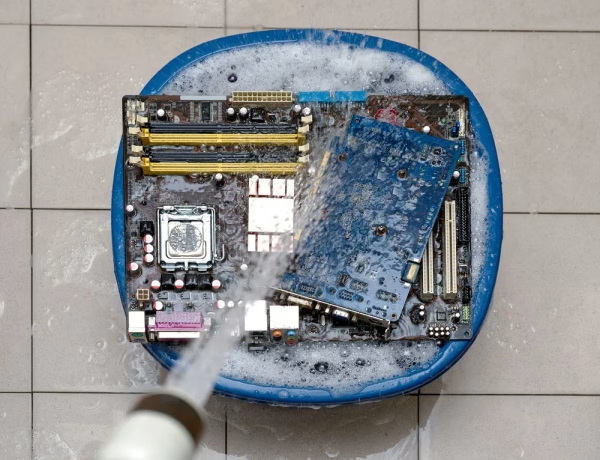
Testing is crucial to validate the effectiveness of the waterproofing method. Common tests include:
- IP (Ingress Protection) Rating Tests:These are standard tests that assess a device’s resistance to solids (dust) and liquids (water). Tests involve specific spray patterns, immersion depths, and durations to assign an IP rating (e.g., IP67, IP68).
- Immersion Testing:Directly submerging the PCB or device in water for a specified period and depth, often coupled with electrical functionality checks before and after immersion.
- Humidity and Condensation Chambers:Placing the PCB in a controlled environment with high humidity and temperature to simulate harsh atmospheric conditions and observe for signs of moisture ingress or corrosion.
- Salt Fog/Spray Testing:Exposing the PCB to a corrosive salt mist to evaluate its resistance to saltwater environments, common in marine applications.
- Dielectric Withstanding Voltage (DWV) Test:Applying a high voltage to test the insulating properties of the coating and ensure it can prevent current leakage even when wet.
- Insulation Resistance (IR) Test:Measuring the electrical resistance between traces and components to detect any pathways for current leakage created by moisture.
7. The Impact of Temperature on Waterproof PCBs
Temperature fluctuations significantly influence the performance and longevity of waterproof PCBs. Materials expand and contract with temperature changes , which can lead to:
- Cracking and Delamination:If the coefficient of thermal expansion (CTE) of the waterproofing material doesn’t match that of the PCB substrate and components, extreme temperature cycles can induce stress, leading to cracks in the coating or delamination from the board. This creates pathways for moisture ingress.
- Material Degradation:Prolonged exposure to high temperatures can cause some waterproofing materials to degrade, losing their flexibility, adhesion, or barrier properties over time. Low temperatures can make materials brittle.
- Thermal Shock:Rapid changes in temperature can put immense stress on the coating, potentially causing immediate failure.
Therefore, selecting a waterproofing material with a suitable CTE and thermal stability for the intended operating temperature range is paramount. Thermal cycling tests are often performed to validate the long-term integrity of the waterproof solution under varying temperatures.
8. Removing Conformal Coatings
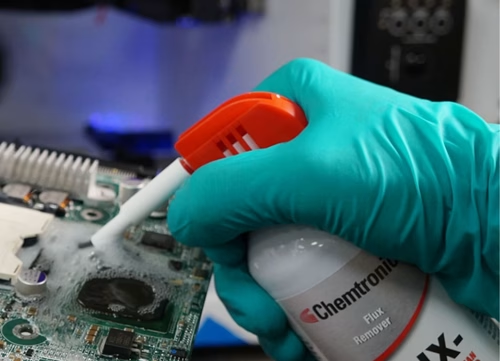
Removing conformal coatings is sometimes necessary for rework, repair, or inspection. The method depends on the coating type:
- Acrylics:Can be easily removed with solvents (e.g., toluene, xylene, specialized strippers) or by peeling.
- Silicones:Typically removed by mechanical abrasion, specialized solvents that swell the coating, or heat.
- Urethanes:Require strong solvents (e.g., methylene chloride) or thermal/mechanical abrasion.
- Epoxies:Extremely difficult to remove; often requires mechanical removal (grinding, scraping) or specialized chemical strippers, which can be harsh.
- Parylene:Usually requires micro-abrasion or plasma etching. Chemical solvents are ineffective.
Always exercise caution when removing coatings to avoid damaging the underlying components or PCB traces.
9. Key Considerations for Effective Waterproofing
Achieving optimal waterproofing requires careful planning and consideration throughout the design and manufacturing process:
- Environmental Requirements:Clearly define the specific environmental conditions the PCB will face (e.g., occasional splash, continuous immersion, humidity levels, chemical exposure, temperature range).
- Material Selection:Choose the waterproofing material based on its protective properties, thermal stability, adhesion characteristics, ease of application, and rework potential relative to the application’s needs.
- Design for Waterproofing:Incorporate features in the PCB design that facilitate waterproofing, such as minimizing sharp edges, avoiding areas where coatings can pool, and ensuring adequate spacing for coating penetration. Consider component placement that might create shadowed areas during coating.
- Thermal Management:If using potting or thick coatings, plan for adequate heat dissipation from critical components. This might involve heat sinks, thermal vias, or selecting thermally conductive potting compounds.
- Cost vs. Protection:Balance the desired level of protection with the budget constraints. Highly robust waterproofing solutions often come with higher costs .
- Manufacturing Process:Ensure the chosen method is compatible with existing manufacturing capabilities and quality control processes.
10.FAQs
There’s no single “best” method; it depends on the application. Conformal coatings offer good protection for many common environments, while potting provides robust defense for harsh conditions. Parylene offers superior thin-film protection but at a higher cost.
For hobbyist projects, applying acrylic or silicone conformal coatings via brushing or spraying is feasible. However, for professional-grade, reliable waterproofing, especially for critical applications or high IP ratings, specialized equipment and expertise are recommended.
IP ratings (Ingress Protection) classify the degree of protection provided by enclosures and electrical equipment against solid objects and liquids. For example, IP67 means full dust protection (6) and protection against temporary immersion in water up to 1 meter for 30 minutes (7). A waterproof PCB helps achieve these ratings for the internal electronics.
Generally , thin conformal coatings have minimal impact on signal integrity, especially at lower frequencies. However, very thick coatings or potting compounds, due to their dielectric properties, can introduce capacitance or affect high-frequency signals, especially if not accounted for in the design.
No, “waterproof” implies a higher level of protection, often including temporary or continuous submersion, while “water-resistant” typically means it can withstand splashes or light exposure without damage.
11.Summary
Waterproof PCBs are indispensable for ensuring the durability, reliability, and extended lifespan of electronic devices operating in challenging environments. By employing various methods such as conformal coating, potting, and advanced nano-coatings, along with careful material selection, manufacturers can protect sensitive circuitry from moisture, humidity, and liquid ingress. While offering significant benefits, these solutions also present challenges in terms of cost, heat dissipation, and repairability. Thorough testing and meticulous consideration of environmental factors and design principles are crucial for achieving effective and long-lasting waterproofing solutions.
If you are looking for a reliable waterproof PCB supplier or have any related inquiries, Orinew Tech Co.,Ltd. is your ideal choice. With 14 years of experience in one-stop PCBA services, we are committed to providing you with perfect solutions.
Related Posts
ORINEWPCB · PROJECT SUPPORT
Contact Us
Discuss your PCB assembly project with our team.
FREE QUOTE
Plan your turnkey PCBA build.
Share your quantity and requirements. Add Gerber files and a BOM when ready.
Files are optional for an initial discussion. Include any assembly, sourcing or testing requirements in your message.