
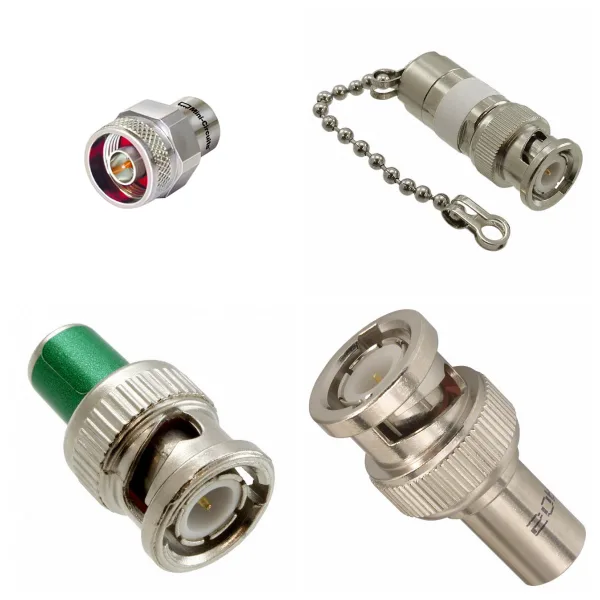
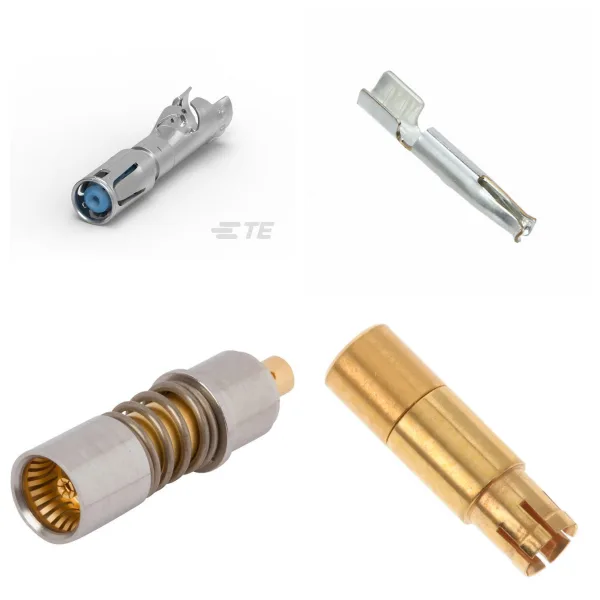
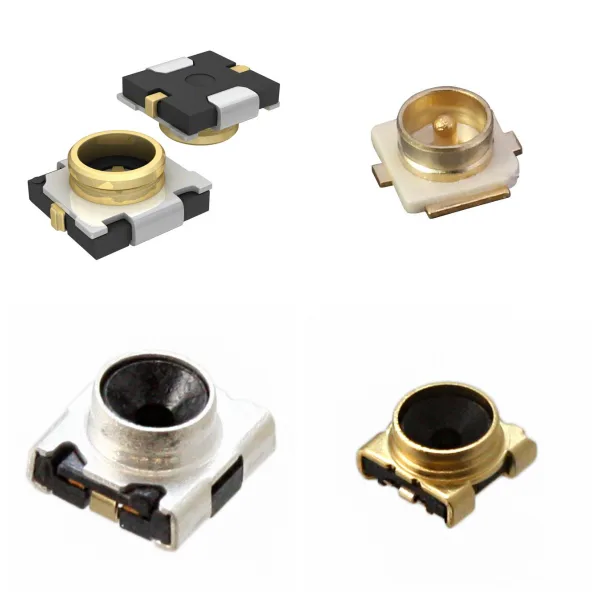
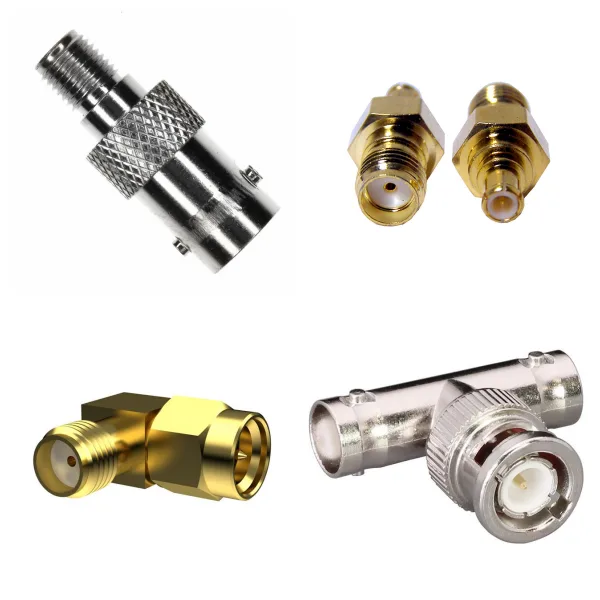

Coaxial Connectors (RF)
RF Coaxial Connectors are key components for RF/microwave signal transmission. They use coaxial structures to achieve efficient electrical connection and separation between devices or within systems. Its core function is to ensure the stability of high-frequency signal transmission while reducing signal loss and electromagnetic interference.
1. Coaxial Connectors (RF) Overview
Basic Structure: It consists of an inner conductor (transmission signal), an outer conductor (shielding layer), an insulating medium (electrical isolation), and a shell (mechanical protection);
Impedance Matching: It is usually designed to be 50Ω (communication equipment) or 75Ω (video equipment) to reduce signal reflection;
Coaxial Advantages: The coaxial design of the cylindrical inner and outer conductors effectively suppresses electromagnetic leakage and external interference.
2. Development History of Coaxial Connectors (RF)
Origin: The first UHF connector was born in 1930, suitable for low-frequency signal transmission;
Military Promotion: During World War II, radar and communication needs gave rise to medium-sized series such as N, BNC, and TNC;
Miniaturization and Standardization:
After 1958, miniaturized products such as SMA and SMB appeared; the MIL-C-39012 standard was formulated in 1964 to promote the global standardization process;
Modern Development: Gradually formed an independent professional system and evolved towards high frequency and high reliability.
3. What are the Types of Coaxial Connectors (RF)?
|
Type |
Features |
Application Scenarios |
|
BNC |
snap-on quick connection, supports frequent plugging and unplugging |
Instruments, video surveillance, computer interconnection |
|
SMA |
threaded connection, excellent high-frequency performance (up to 40GHz) |
Wireless communication, satellite communication, microwave equipment |
|
N Type |
High power carrying capacity, strong reliability |
Base station, radar system |
|
Board-to-board |
Compact design, suitable for miniaturized equipment |
Distributed base stations, medical equipment, industrial automation |
4. Technical Characteristics and Challenges of Coaxial Connectors (RF)
Key Performance:
Frequency range (MHz to GHz level);
Standing wave ratio (VSWR) and insertion loss control;
Industry Difficulties:
Mechatronics design needs to balance mechanical strength and high-frequency performance;
Alignment accuracy and assembly difficulty challenges brought by miniaturization;
Complex failure mode analysis under high-reliability requirements.
5. Industry status and trends of Coaxial Connectors (RF)
Global Pattern: The United States, Britain, France, and other countries are leading in standard setting and material technology, forming a complete industrial chain;
Future Direction: Evolution to higher frequency bands (millimeter waves), low-loss materials, and automated assembly technology.
