
ORINEWPCB · COMPONENTS & TURNKEY PCBA
Terminal Blocks — Component Sourcing
Browse Terminal Blocks and send the exact manufacturer part number, required quantity and target date. For a complete board build, include your BOM and PCB files in a turnkey PCBA request.
Catalog entries and category counts do not confirm stock or delivery. Availability, pricing and any proposed alternatives are reviewed for your request.
One part number or a complete BOM?
For individual parts, send the exact manufacturer part number, manufacturer, quantity and required date. For a BOM, include part numbers, quantities per board, reference designators and any approved alternatives.
Need the components assembled?
Keep the board files and BOM on one revision. Request PCB fabrication, sourcing and assembly together, with programming or functional testing defined for your build.
Browse component categories.
Cannot find your part in the directory? Send the full part number or your BOM for review.
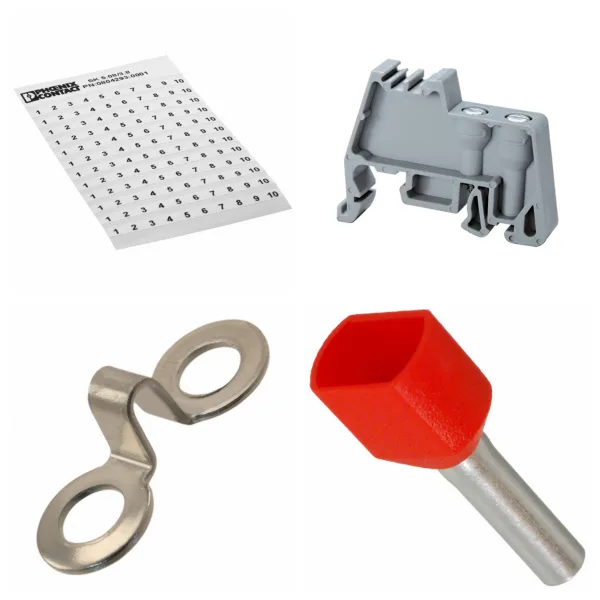
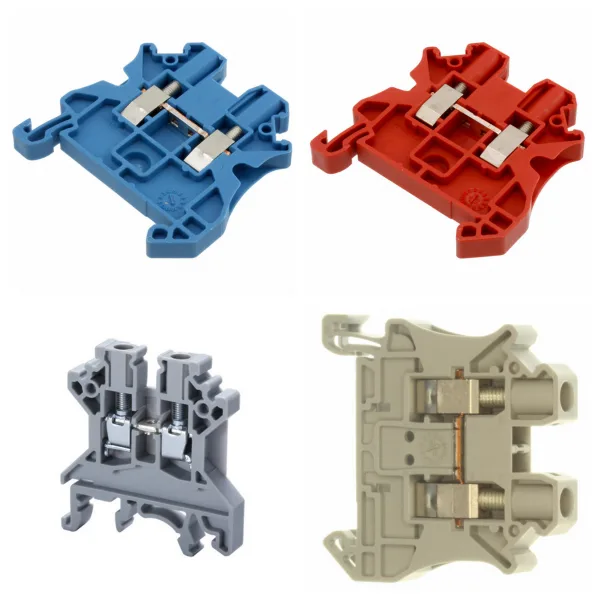
Terminal Blocks
1. What are Terminal Blocks?
Terminal Blocks (TB for short), also known as terminal blocks, terminal blocks, terminal strips, etc. in Chinese, are standardized components used for circuit connection in electronic components. Its main functions include:
Wire Connection: reliably connect multiple wires or circuit board pins to facilitate circuit wiring and management;
Signal Transmission: ensure stable transmission of electrical signals while preventing wires from falling off or loosening;
Modular Expansion: supports flexible system expansion through modular design, commonly used in industrial automation equipment and electrical control cabinets.
2. What are the Core Components of Terminal Blocks?
Terminal Blocks are usually composed of the following core components:
Shell: mostly made of plastic or metal, used to protect internal components and fix the overall structure;
Insulator: isolate conductive parts to ensure electrical safety, commonly used materials are high-temperature-resistant engineering plastics;
Contact Body: metal conductive sheet or pin, responsible for crimping or welding of wires, mostly made of copper alloy to reduce resistance.
3. What are the Types of Terminal Blocks?
Based on design features and application scenarios, Terminal Blocks can be divided into the following categories:
1) By Connection Method:
Screw-fixed Type: The wire is fastened by screws, which is highly reliable and suitable for high current scenarios;
Push-In: Quick installation using springs or separation rods, easy maintenance, such as Push-In Plus terminal blocks;
Welding Type: Directly welded to the PCB board, commonly found inside electronic devices.
2) By Electrical Parameters:
Rated Current: Covers different levels from 10A to 400A, adapting to a variety of needs from weak current to strong current;
Rated Voltage: Supports 150V to 600V+, meeting the requirements of low-voltage control and high-voltage power distribution.
3) By Appearance Structure: Circular terminal blocks, rectangular terminal blocks, and sealed and high-temperature types for specific scenarios.
4. What are Terminal Blocks Used for?
Terminal Blocks are widely used in:
Industrial Automation: Signal and power connection of PLC, sensors, actuators, and other equipment;
Power System: Wire collection and branching management of distribution cabinets and circuit breakers;
Transportation and Communication: Rail transit signal system, communication base station equipment wiring.
5. Technology Development Trends of Terminal Blocks
High-density Design: Compact terminal blocks support more poles (such as 40P models) to meet the needs of miniaturized equipment;
Safety Improvement: Through UL 1059 and other certification standards, the insulation performance and fire protection level are enhanced;
Intelligent Integration: Integrate functions such as fuses and signal indicators to reduce dependence on peripheral components.
6. Terminal Blocks FAQs
1) What is the difference between terminal blocks and busbars?
Busbars focus on distributing multiple branch circuits from a single power source, while terminal blocks focus on routing multiple independent circuits and support modular circuit design.
2) What are the main application scenarios of terminal blocks?
Commonly used in vehicle power systems, industrial equipment power distribution, and printed circuit board (PCB) signal transmission, especially in scenarios that require high-density connections (such as SMD PCB terminal blocks).
3)What are the characteristics of the materials and performance of the terminal block?
Non-magnetic metal materials are used to reduce electromagnetic interference, corrosion-resistant design is suitable for harsh environments, and high contact pressure ensures low temperature rise and stable operation.
4) How to choose a terminal block suitable for a PCB?
PCB terminals need to match signal transmission requirements, such as compact design to adapt to high-density layout, and specific models (such as SMD packaging) can optimize space utilization.
PARTS, BOM OR COMPLETE PCBA
Request your component or BOM quote.
Tell us whether you need parts only or a finished PCB assembly. Availability, price, order quantity and delivery are confirmed for your specific request.
- Exact manufacturer part numbers and manufacturers
- Required quantity, target date and shipping destination
- BOM file and quantity per board for a complete build
- Approved alternatives and any parts that must not be substituted
- For turnkey PCBA: PCB files, placement data and test requirements
Proposed substitutions need your approval. Tell us about traceability, documentation or packaging requirements before purchasing is agreed.
Files are optional for an initial discussion. You can send the BOM by email if the uploader does not accept your file. An inquiry does not authorize purchasing or production.
Start with your requirements.
Email is required. Add “components only” or “full turnkey PCBA” in the service field.
