
ORINEWPCB · COMPONENTS & TURNKEY PCBA
Coaxial Connectors (RF) — Component Sourcing
Browse Coaxial Connectors (RF) and send the exact manufacturer part number, required quantity and target date. For a complete board build, include your BOM and PCB files in a turnkey PCBA request.
Catalog entries and category counts do not confirm stock or delivery. Availability, pricing and any proposed alternatives are reviewed for your request.
One part number or a complete BOM?
For individual parts, send the exact manufacturer part number, manufacturer, quantity and required date. For a BOM, include part numbers, quantities per board, reference designators and any approved alternatives.
Need the components assembled?
Keep the board files and BOM on one revision. Request PCB fabrication, sourcing and assembly together, with programming or functional testing defined for your build.
Browse component categories.
Cannot find your part in the directory? Send the full part number or your BOM for review.
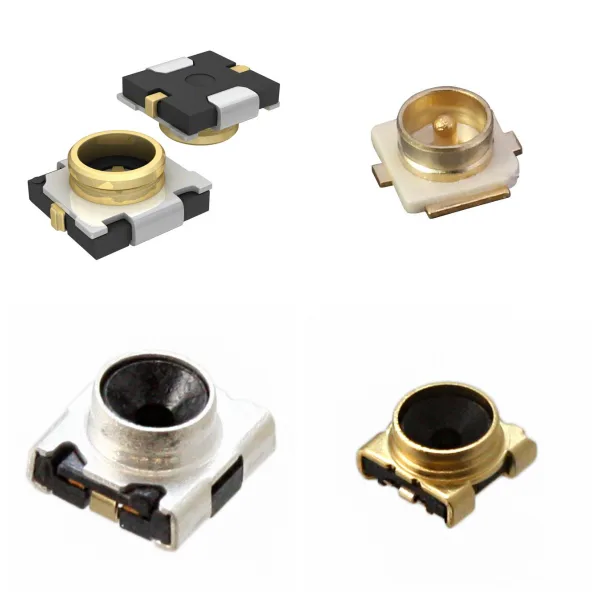
Coaxial Connectors (RF)
RF Coaxial Connectors are key components for RF/microwave signal transmission. They use coaxial structures to achieve efficient electrical connection and separation between devices or within systems. Its core function is to ensure the stability of high-frequency signal transmission while reducing signal loss and electromagnetic interference.
1. Coaxial Connectors (RF) Overview
Basic Structure: It consists of an inner conductor (transmission signal), an outer conductor (shielding layer), an insulating medium (electrical isolation), and a shell (mechanical protection);
Impedance Matching: It is usually designed to be 50Ω (communication equipment) or 75Ω (video equipment) to reduce signal reflection;
Coaxial Advantages: The coaxial design of the cylindrical inner and outer conductors effectively suppresses electromagnetic leakage and external interference.
2. Development History of Coaxial Connectors (RF)
Origin: The first UHF connector was born in 1930, suitable for low-frequency signal transmission;
Military Promotion: During World War II, radar and communication needs gave rise to medium-sized series such as N, BNC, and TNC;
Miniaturization and Standardization:
After 1958, miniaturized products such as SMA and SMB appeared; the MIL-C-39012 standard was formulated in 1964 to promote the global standardization process;
Modern Development: Gradually formed an independent professional system and evolved towards high frequency and high reliability.
3. What are the Types of Coaxial Connectors (RF)?
|
Type |
Features |
Application Scenarios |
|
BNC |
snap-on quick connection, supports frequent plugging and unplugging |
Instruments, video surveillance, computer interconnection |
|
SMA |
threaded connection, excellent high-frequency performance (up to 40GHz) |
Wireless communication, satellite communication, microwave equipment |
|
N Type |
High power carrying capacity, strong reliability |
Base station, radar system |
|
Board-to-board |
Compact design, suitable for miniaturized equipment |
Distributed base stations, medical equipment, industrial automation |
4. Technical Characteristics and Challenges of Coaxial Connectors (RF)
Key Performance:
Frequency range (MHz to GHz level);
Standing wave ratio (VSWR) and insertion loss control;
Industry Difficulties:
Mechatronics design needs to balance mechanical strength and high-frequency performance;
Alignment accuracy and assembly difficulty challenges brought by miniaturization;
Complex failure mode analysis under high-reliability requirements.
5. Industry status and trends of Coaxial Connectors (RF)
Global Pattern: The United States, Britain, France, and other countries are leading in standard setting and material technology, forming a complete industrial chain;
Future Direction: Evolution to higher frequency bands (millimeter waves), low-loss materials, and automated assembly technology.
PARTS, BOM OR COMPLETE PCBA
Request your component or BOM quote.
Tell us whether you need parts only or a finished PCB assembly. Availability, price, order quantity and delivery are confirmed for your specific request.
- Exact manufacturer part numbers and manufacturers
- Required quantity, target date and shipping destination
- BOM file and quantity per board for a complete build
- Approved alternatives and any parts that must not be substituted
- For turnkey PCBA: PCB files, placement data and test requirements
Proposed substitutions need your approval. Tell us about traceability, documentation or packaging requirements before purchasing is agreed.
Files are optional for an initial discussion. You can send the BOM by email if the uploader does not accept your file. An inquiry does not authorize purchasing or production.
Start with your requirements.
Email is required. Add “components only” or “full turnkey PCBA” in the service field.
